
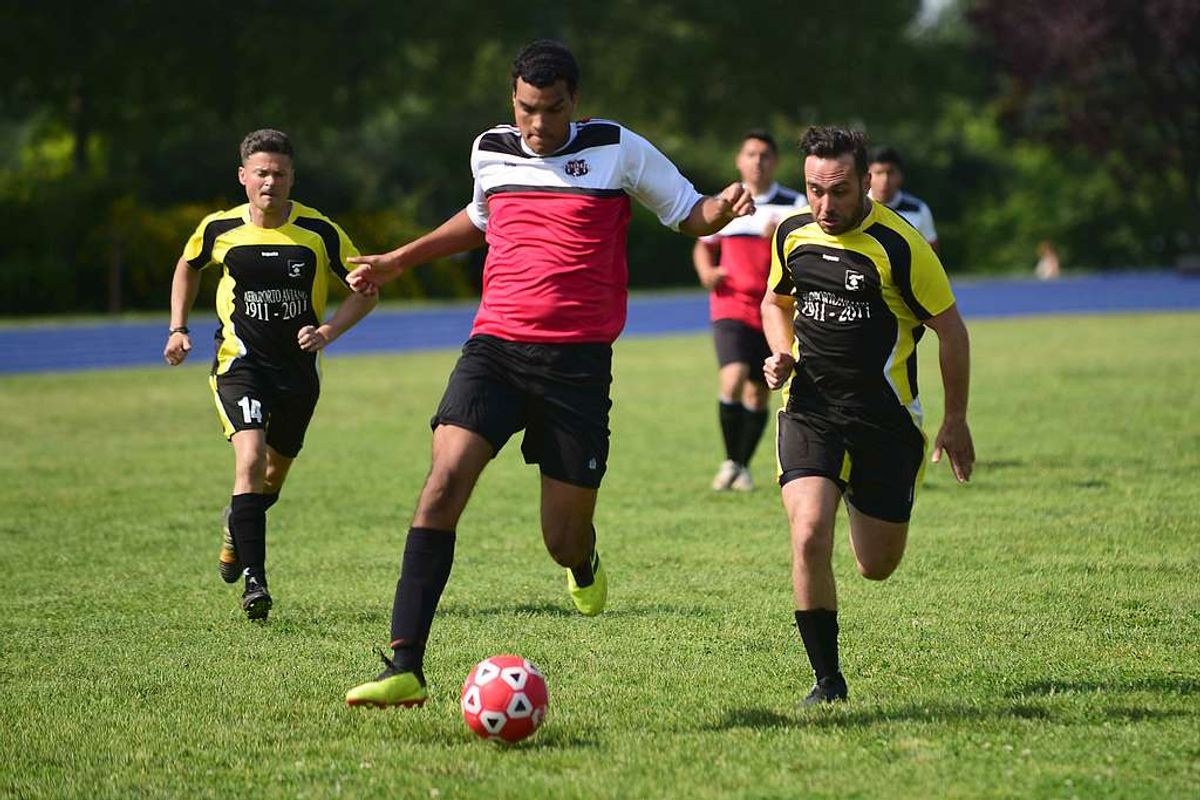
Soccer Rondo is a blog that educates users about the sport and the latest equipment. It includes tips and tricks, reviews, and explanations. Incorporating Rondo practices into your team’s training routine can significantly enhance your players’ skills and teamwork. This article explores various Rondo practices and training techniques that can elevate your team’s performance on the field.
Key Takeaways
- Rondo practices are effective for improving dribbling, cutting, shooting, and ball possession skills in soccer training routines.
- Incorporating variations and challenges in training sessions enhances players’ agility, decision-making, and spatial awareness.
- Positional play drills can help players develop better ball possession and transition skills during matches.
- Attention to transitions, quickness support, and space cover are crucial aspects to focus on for a well-rounded training routine.
- Utilizing drills that simulate game-like situations, such as 1v1 scenarios and shooting competitions, can improve players’ confidence and performance on the field.
Rondo Practices for Dribbling and Cutting
Dribbling Marker Conquest – Ajax FC
In our quest to enhance ball possession and agility, we’ve adopted the Dribbling Marker Conquest drill from Ajax FC. This exercise is pivotal in training various ball carrying techniques and improving speed. We divide our players into small groups, each tasked with navigating through a series of markers as swiftly as possible while maintaining control of the ball.
The key to success in this drill is the emphasis on quick directional changes and close ball control. It’s not just about speed; it’s about precision under pressure.
To measure progress, we keep a record of each player’s time to complete the course. This friendly competition fosters a high-intensity environment where players are motivated to improve their personal bests. Below is an example of how we track the improvements over a four-week period:
| Week | Average Time (seconds) |
|---|---|
| 1 | 45 |
| 2 | 43 |
| 3 | 41 |
| 4 | 39 |
By incorporating this drill into our routine, we’ve seen significant improvements in our team’s ability to maneuver in tight spaces and retain possession under pressure.
Dribbling – Exercise for Ball Carrying Techniques
In our quest to enhance our team’s ball handling skills, we’ve adopted a series of exercises that focus on improving dribbling finesse and speed. One such exercise is the Dribbling Marker Conquest, inspired by the training routines of Ajax FC. This drill emphasizes the importance of mastering several ball carrying techniques, which are crucial for maintaining possession under pressure.
To ensure our players are adept with both feet, we incorporate drills that require them to dribble with their non-dominant foot as well. This not only improves their overall ball control but also their confidence in using both feet during a match.
We also stress the significance of dribbling with a raised head, a skill that allows players to maintain awareness of their surroundings. Our coaches provide visual signals during drills to train this aspect, reinforcing the need for players to be perceptive while maneuvering the ball.
Here’s a simple list of tips we’ve found useful for our dribbling practice:
- Dribble every day to build muscle memory
- Pound the ball to develop a stronger touch
- Get better at both hands, or in our case, both feet
- Master change of direction and speed to outmaneuver opponents
Cut Rondo 4 vs 2 – Striker’s Unmarking
In our training sessions, we focus on the Cut Rondo 4 vs 2 exercise to enhance our strikers’ ability to unmark and find space. This drill simulates real-game scenarios where strikers must constantly seek depth and evade defenders. Players 6, 7, 8, 9, and 10 start behind the line of opposing players, working on their timing and coordination to break the offside trap.
The key to success in this drill is the quality of passing sequences and the strikers’ movements to unmark in space. We create a 30×25-meter area to replicate the tight spaces in which strikers operate during a match. Here’s a simple breakdown of the exercise:
- The four players circulate the ball, maintaining possession.
- Two defenders attempt to intercept or disrupt play.
- Strikers work on their cuts and unmarking to receive the ball in advantageous positions.
By mastering this drill, our team improves its in-depth attacking capabilities, crucial for breaking down well-organized defenses.
Cut – Preparatory Drill for Depth
We’ve designed a Cut drill that focuses on creating depth through the striker’s movements. This drill is essential for teams that want to enhance their offensive play by teaching strikers how to make intelligent runs behind the defense. The key is to simulate game-like conditions to ensure that the strikers can transfer these skills into a match situation.
To execute this drill effectively, follow these steps:
- Set up a grid with enough space for the strikers to make runs.
- Position defenders to apply pressure and create realistic challenges.
- Instruct the strikers on various cutting techniques to lose their markers.
- Practice with varying degrees of defensive pressure to build confidence and adaptability.
Remember, the success of this drill hinges on the strikers’ ability to read the game and make decisive cuts at the right moments. It’s not just about the physical act of cutting; it’s about the cognitive understanding of when and where to make these movements.
Shooting Challenges and Competitions
Shooting Competition of Shots on Goal
We’ve designed a Shooting Competition of Shots on Goal to enhance our players’ precision and composure in front of the net. This drill is structured to simulate match conditions, with a playing area of 30×30 meters and involving at least 12 players plus 2 goalkeepers. The competition runs for 16 minutes, divided into two series of 8 minutes each, with a 2-minute passive break in between.
To ensure a comprehensive challenge, we incorporate various types of stops and ball control. Each player must adapt quickly to different scenarios, promoting versatility in their shooting technique. Here’s a quick rundown of the setup:
- Playing Area: 30×30 meters
- Players: At least 12 + 2 goalkeepers
- Duration: 16 minutes
- Series: 2 of 8 minutes each
By focusing on this competitive format, we aim to replicate the pressure and intensity of an actual game, pushing our players to perform under stress and improve their goal-scoring abilities.
Remember, the key to success in this drill is not just the number of goals scored, but also the quality of shots and the ability to control the ball under pressure. Encourage your players to take calculated risks and strive for accuracy over power.
Shooting – Team Challenge on Ball Control
In our team’s training routine, we emphasize not just shooting accuracy, but also the control that leads up to it. Ball control is the cornerstone of a successful shot on goal, and we challenge our players to master it under various conditions. We’ve designed a series of exercises that simulate match scenarios, requiring players to stop the ball with precision before taking a shot.
- First, we focus on stopping the ball with different parts of the foot.
- Next, we incorporate movement, where players must control and shoot while on the run.
- Finally, we add defensive pressure to replicate in-game stress.
The key to these challenges is to create an environment that is both competitive and instructive, pushing players to refine their technique while fostering a team spirit.
We track progress through a simple scoring system, rewarding not just the goals, but the quality of control exhibited:
| Attempt | Control Quality | Successful Shot |
|---|---|---|
| 1 | Excellent | Yes |
| 2 | Good | No |
| 3 | Fair | Yes |
This table serves as a quick reference for coaches to provide immediate feedback and for players to self-assess and motivate improvement.
Receiving and Shielding of the Ball – 1 v 1 Situations
In our training sessions, we emphasize the importance of mastering the art of receiving and shielding the ball in 1 v 1 situations. This skill is crucial for maintaining possession and creating space for a shot on goal. Players must be adept at using their body to protect the ball from defenders, ensuring they have the necessary time to make a decisive play.
To develop this skill, we focus on exercises that simulate real-game scenarios. Players are paired up and tasked with receiving a pass while under pressure from a defender. The objective is to control the ball, shield it effectively, and then either pass to a teammate or take a shot on goal. Here’s a simple drill structure we use:
- Step 1: Player A passes the ball to Player B.
- Step 2: Player B receives the ball and immediately uses their body to shield it from Player A, who now acts as a defender.
- Step 3: Player B must maintain possession for at least 3 seconds before making a play.
By consistently practicing these steps, our team members enhance their ability to hold off opponents and gain the upper hand in duels. The drill also improves their quick decision-making skills, which are essential in high-pressure situations.
Remember, the key to successful shielding is not just strength, but also the smart use of body positioning and balance. Encourage players to be aware of their surroundings and to use their peripheral vision to spot opportunities for a pass or a shot. This not only boosts their confidence in possession but also contributes to the overall fluidity of the team’s play.
Training Techniques and Variations
Ball Exchange Drill with Obstacles
We’ve designed a drill that not only sharpens our players’ ability to maintain possession but also enhances their spatial awareness and reaction time. The ball exchange through the central strip becomes a complex task when we introduce obstacles such as mannequins and poles. This variation requires players to navigate the field with a heightened sense of their surroundings, much like the watching the ball drills in tennis that improve timing and control.
The key to this drill is the continuous movement of players and the support in quickness provided by jokers. It’s crucial to maintain attention to transitions and ensure good space cover.
Our coaching points focus on the dynamic aspects of the game: the relentless movement of players across the pitch, the quick support from jokers, and the meticulous attention to transitions. We emphasize the importance of covering space effectively, which is a skill that translates directly to match situations. Here’s a quick rundown of the drill setup:
- Players move freely in a designated area, approximately 20m x 20m.
- A few players start without a ball, while the rest are dribbling.
- The coach gives visual signals, requiring players to dribble with their heads up.
This exercise is suitable for various age groups, from the first team to the under-12s, and it’s tagged under key concepts such as losing your marker, passing, intercepting, mobility, and ball possession.
Continuous Movement and Quickness Support
In our training sessions, we emphasize the importance of continuous movement and support in quickness. This is not just about the players’ ability to move swiftly, but also about their understanding of when and where to move to support the play effectively.
Support play is crucial in maintaining ball possession and facilitating smooth transitions. By incorporating jokers, or neutral players, we can increase the intensity and complexity of the drills, challenging our players to think and act quickly.
To ensure that our players are adept at covering space efficiently, we introduce variations in our drills. For instance, we might add obstacles such as mannequins or poles during ball exchanges to simulate real-match scenarios. This not only improves their agility but also their decision-making under pressure.
Our focus is on developing players who are not just physically agile but also tactically astute. They should be able to anticipate the game’s flow and adapt their movements accordingly.
By regularly practicing these drills, we aim to enhance our team’s overall speed, agility, and quickness, which are vital components in the modern game. The table below outlines the age groups that can benefit from these drills, emphasizing that this approach is suitable for a wide range of players.
| Age Group | Drill Type |
|---|---|
| First Team | Support Small-sided Game |
| Under 21 | Ball Possession & Recovery |
| Under 17 | 1 v 1 with Shot on Goal |
| Under 15 | Peripheral Vision & Passing |
| Under 12 | Immediate Transition to Shoot |
Attention to Transitions and Space Cover
We’ve learned that the key to mastering transitions is to ensure continuous movement and support in quickness. Our players must be adept at both losing their marker and covering space efficiently. This not only enhances our ball possession but also prepares us for quick changes from defense to attack and vice versa.
The drill setup includes a playing area of 40×20 meters with 12 players, focusing on dynamic ball exchange and positional play. It’s crucial to incorporate obstacles, like mannequins or poles, to simulate real-match scenarios and improve players’ agility and spatial awareness.
Here’s a simple breakdown of the drill:
- Players are divided into two teams, with jokers acting as neutral supporters.
- The objective is to maintain possession while navigating through the central strip with obstacles.
- Emphasis is placed on quick support from the jokers and the ability to intercept passes.
By integrating these practices into our routine, we ensure that our team is well-prepared for the fluid nature of the game, where ball possession and the ability to quickly transition can make all the difference.
Positional Play for Ball Possession
1 versus 1 Quick Practice with Shot on Goal
In our training sessions, we focus on creating realistic game scenarios. One such drill is the 1 versus 1 quick practice with a shot on goal. This exercise is designed to enhance players’ ability in fast ball driving and accurate goal shooting under pressure. It’s a dynamic drill that pits an attacker against a defender in a head-to-head challenge.
The setup requires minimal equipment: 8 markers, 8 vests, and a few balls. Here’s a simple breakdown of the drill:
- Place markers to define the playing area and goal boundaries.
- Assign vests to distinguish attackers from defenders.
- Players take turns being the attacker, driving the ball towards the goal with speed.
- Defenders work on their ability to read the game and react quickly to block the shot.
The key to success in this drill is the transition from attack to defense. Players must be agile and decisive, making the most of each opportunity to strike or defend.
By incorporating this practice into our routine, we aim to sharpen our players’ competitiveness and readiness for 1 v 1 situations during matches.
Pass Technical Warm-up for Peripheral Vision
We’ve incorporated a pass technical warm-up that focuses on enhancing players’ peripheral vision. This exercise is not only about improving technique but also about stimulating players’ awareness of their surroundings. Peripheral vision is crucial for maintaining ball possession and making informed decisions on the pitch.
To set up the drill, we use 8 markers and 8 vests (4 per color) along with several balls. Players are instructed to pass and move in a dynamic environment, constantly scanning the field. This drill serves as a cognitive challenge, pushing players to process multiple stimuli at once.
The key to this exercise is the continuous movement and communication among players, which sharpens their ability to perceive actions in their peripheral field without losing focus on the ball.
By regularly practicing this warm-up, we aim to improve our team’s overall coordination and cognitive skills, which are essential during high-pressure matches.
Dribbling Game – Ball Exchange
In our Dribbling Game – Ball Exchange, we focus on enhancing the players’ ability to maintain control while being aware of their surroundings. The drill takes place in a confined area, typically 20m x 20m, where most of the kids are dribbling a ball while a few start without one. The objective is for those without a ball to acquire one through a ball exchange, promoting agility and quick decision-making.
The key to this exercise is continuous movement and the ability to adapt to transitions quickly. Players must keep their heads up, scanning for opportunities to exchange balls while navigating the space effectively.
To add complexity, we sometimes introduce obstacles like mannequins or poles in the central strip, which encourages players to develop their dribbling skills further. Here are some coaching points we emphasize:
- Continuous movement of players
- Support in quickness by jokers
- Attention to transitions
- Good space cover
This drill is suitable for various age groups, from under 12 to the first team, and it’s a fun way to improve ball possession and mobility.
Conclusion
Incorporating Rondo practices into your team’s training routine can greatly enhance players’ skills and teamwork on the field. By focusing on drills like Dribbling Marker conquest, Shooting Competition, and Positional Play, coaches can help players improve their ball possession, transitions, and overall game strategy. The emphasis on continuous movement, quickness, and good space cover can lead to a more dynamic and effective playing style. With a holistic approach to training, teams can cultivate a love for the sport and lay a strong foundation for success in soccer. Soccer Rondo’s educational resources and practical tips can further support coaches in implementing these valuable training methods.
Frequently Asked Questions
What is the significance of Rondo Practices in soccer training?
Rondo Practices in soccer training are essential for improving players’ ball control, decision-making, and quick passing abilities. These practices help players develop their technical skills and enhance their ability to maintain possession under pressure.
How can Rondo Practices benefit a team’s overall performance?
Rondo Practices can benefit a team’s overall performance by enhancing players’ communication, teamwork, and spatial awareness on the field. These practices also help players adapt to different game situations and improve their ability to transition from defense to attack.
What age groups are suitable for incorporating Rondo Practices into training routines?
Rondo Practices can be incorporated into training routines for various age groups, starting from youth players to professional levels. The drills and exercises can be adapted to suit the skill level and development stage of the players, making them suitable for all ages.
How can Rondo Practices improve players’ decision-making skills?
Rondo Practices improve players’ decision-making skills by putting them in situations where they have to read the game quickly, anticipate movements, and make split-second decisions. This helps players develop their cognitive abilities and tactical awareness on the field.
What variations can be introduced to make Rondo Practices more challenging and engaging?
To make Rondo Practices more challenging and engaging, coaches can introduce variations such as adding obstacles to the drill, increasing the number of players in the Rondo, or limiting the space available for the players. These variations help players improve their adaptability and creativity during training.
How can Rondo Practices contribute to a team’s style of play and tactical approach?
Rondo Practices can contribute to a team’s style of play and tactical approach by emphasizing principles such as ball possession, quick transitions, and effective communication. By incorporating Rondo Practices into training routines, teams can develop a cohesive playing style that focuses on control, movement, and fluidity on the field.