
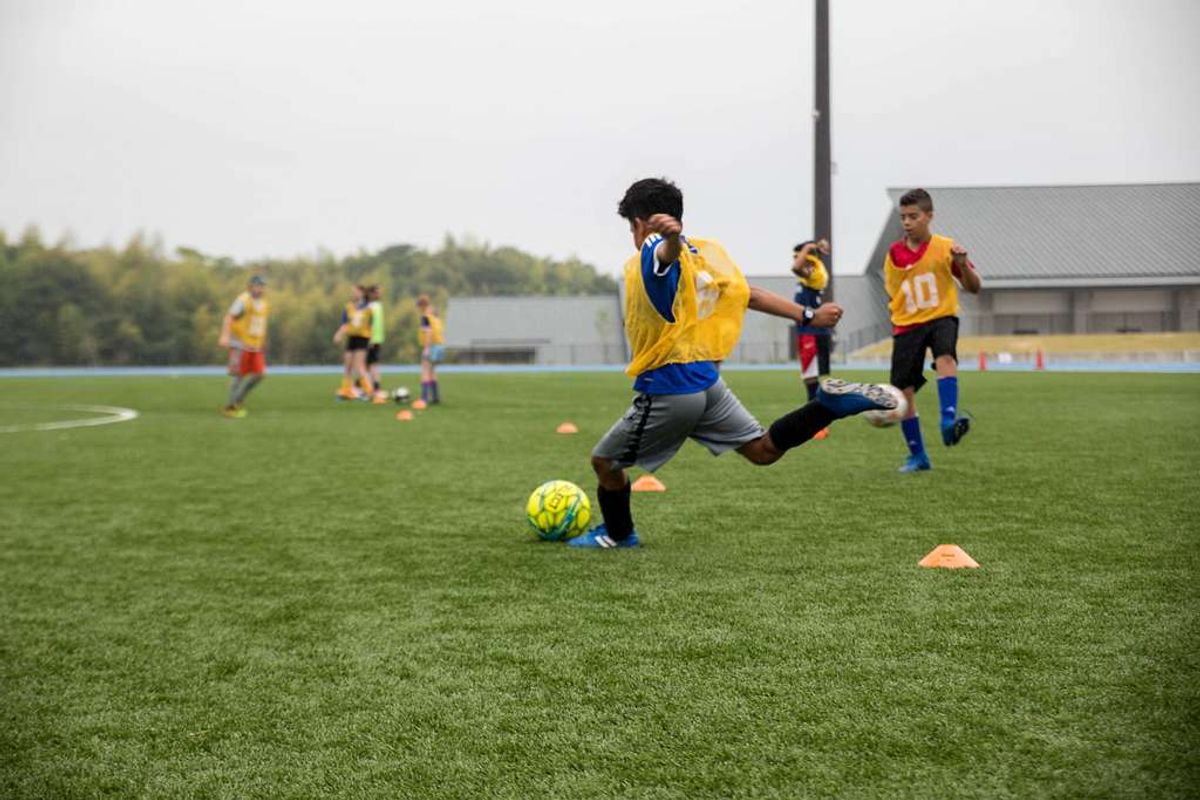
Soccer Rondo is a blog that educates users about the sport and the latest equipment. It includes tips and tricks, reviews, and explanations. Mastering the art of soccer requires dedicated practice and skill development. Rondo drills are essential for improving ball control, decision-making, and overall gameplay. Here are the top 5 Rondo drills that can help players enhance their skills on the field:
Key Takeaways
- Consistent practice of Rondo drills can significantly improve ball control and decision-making skills.
- Rondo drills help players develop a better understanding of spacing and movement on the field.
- Precision passing and quick decision-making are key aspects enhanced through Rondo drills.
- The dynamic nature of Rondo drills challenges players to think quickly and adapt to changing situations.
- Mastering Rondo drills can lead to improved teamwork and communication among players.
1. Four Corners Passing Game
In the Four Corners Passing Game, we focus on sharpening our players’ ability to retain possession under pressure. This drill, inspired by the high-paced training methods of Julian Nagelsmann, emphasizes quick thinking and accurate passing.
The essence of this drill is to simulate real-match scenarios where players are confined to tight spaces and must make rapid decisions.
To set up the drill, we divide our team into three groups. Two teams work inside the square, while the third team applies pressure. Here’s a simple breakdown:
- Team A and Team B (4 players each) position themselves at the corners of a square.
- Team C (2 players) attempts to intercept the ball.
- The ball must be kept away from the interceptors at a high pace.
This exercise not only improves ball control but also enhances spatial awareness and communication among teammates. It’s a fundamental drill that lays the groundwork for more complex rondo exercises.
2. Two-touch Limit Rondo
In the Two-touch Limit Rondo, we focus on sharpening our players’ ability to control and pass the ball with limited touches. This drill instills a quick decision-making process and enhances ball retention under pressure. The essence of this exercise is to maintain possession with a maximum of two touches per player.
- Start by forming a circle with a group of players around the outside and one or two defenders inside.
- The objective for the outer players is to keep the ball away from the defenders.
- If a defender intercepts or touches the ball, they switch places with the player who lost possession.
The key to success in this drill is constant movement and communication among teammates.
By incorporating this drill into our training sessions, we not only improve our players’ technical skills but also their tactical understanding of the game. It’s a fundamental part of our coaching philosophy to develop players who are comfortable on the ball in any situation.
3. Dynamic Box Rondo
In the Dynamic Box Rondo, we focus on enhancing our players’ adaptability and quick decision-making. This drill is designed to simulate match conditions by constantly changing the size and shape of the playing area. Players must adjust their tactics and ball control in real-time, which is crucial for in-game situations.
- Start with a square playing area of 10×10 yards.
- Randomly change the dimensions at intervals, e.g., 15×10 or 20×5 yards.
- Players should use two-touch to keep the ball moving.
- Introduce neutral players to increase passing options.
The key to success in this drill is fluid movement and constant communication. Players should be encouraged to call for the ball and direct their teammates to adjust their positioning as the playing area changes.
Remember, the goal is not just to keep possession but to do so with purpose and precision. The Dynamic Box Rondo teaches players to be comfortable with the ball at their feet, no matter the space constraints.
4. Rondo Pressure Box
In the Rondo Pressure Box, we focus on simulating match-like pressure. Players are confined to a small space, which forces quick thinking and sharp passing. The key to success in this drill is maintaining composure under pressure, ensuring that the ball is kept away from the defenders in the middle.
- Start with a square grid of 10×10 yards.
- Position four attackers on the corners and two defenders inside the box.
- The attackers aim to keep possession with a two-touch limit.
- Rotate defenders every two minutes to keep the intensity high.
This drill is excellent for improving spatial awareness and reaction time. It teaches players to make eye contact and anticipate movements, which are crucial for maintaining possession under pressure.
Remember, the objective is not just to keep the ball but to do so with purpose. Encourage players to save ball control by adopting the correct body posture and to avoid collisions by being aware of their surroundings.
5. One-touch Directional Rondo
In our quest to master the art of soccer, we’ve explored various rondo drills, and now we arrive at the One-touch Directional Rondo. This drill sharpens our players’ ability to make quick decisions and develop superior passing skills. The essence of this exercise is to maintain possession with one-touch passes while being aware of the direction of play.
The key to success in this drill is the players’ movement off the ball, creating passing lanes and options for the player in possession.
To execute this drill effectively, follow these steps:
- Set up a grid of 20×20 yards with two teams of four players each.
- One team works to keep possession, while the other applies pressure.
- The direction of play is established, and players must pass the ball accordingly.
- After a set number of passes, the teams switch roles.
Remember, the focus is on quick, accurate passes. Encourage players to ‘pass and move’ to maintain the flow of the game. This drill is a fantastic exercise to incorporate into your training sessions for enhanced team coordination and ball control.
Conclusion
In conclusion, mastering the art of soccer requires dedication, practice, and the right drills. The top 5 Rondo drills discussed in this article are essential for improving ball control and overall performance on the field. By incorporating these drills into your training routine, you can enhance your skills and elevate your game to the next level. Stay tuned to Soccer Rondo for more tips, tricks, and updates on the world of soccer!
Frequently Asked Questions
What is the purpose of Rondo drills in soccer training?
Rondo drills in soccer training are designed to improve players’ ball control, decision-making, and quick passing skills in tight spaces.
How often should Rondo drills be incorporated into soccer training sessions?
Rondo drills can be incorporated into soccer training sessions multiple times a week, depending on the team’s schedule and goals.
Are Rondo drills suitable for players of all skill levels?
Yes, Rondo drills can be adapted to suit players of all skill levels, from beginners to advanced players.
What equipment is needed to perform Rondo drills?
To perform Rondo drills, players typically need soccer balls, cones to mark the playing area, and a group of teammates to participate in the drill.
How can Rondo drills help improve teamwork on the soccer field?
Rondo drills promote teamwork by encouraging players to communicate effectively, anticipate their teammates’ movements, and work together to maintain possession of the ball.
Where can I find more information about soccer training drills and equipment?
You can visit Soccer Rondo, a blog that provides educational content on soccer training drills, equipment reviews, tips, and tricks to enhance your skills on the field.