
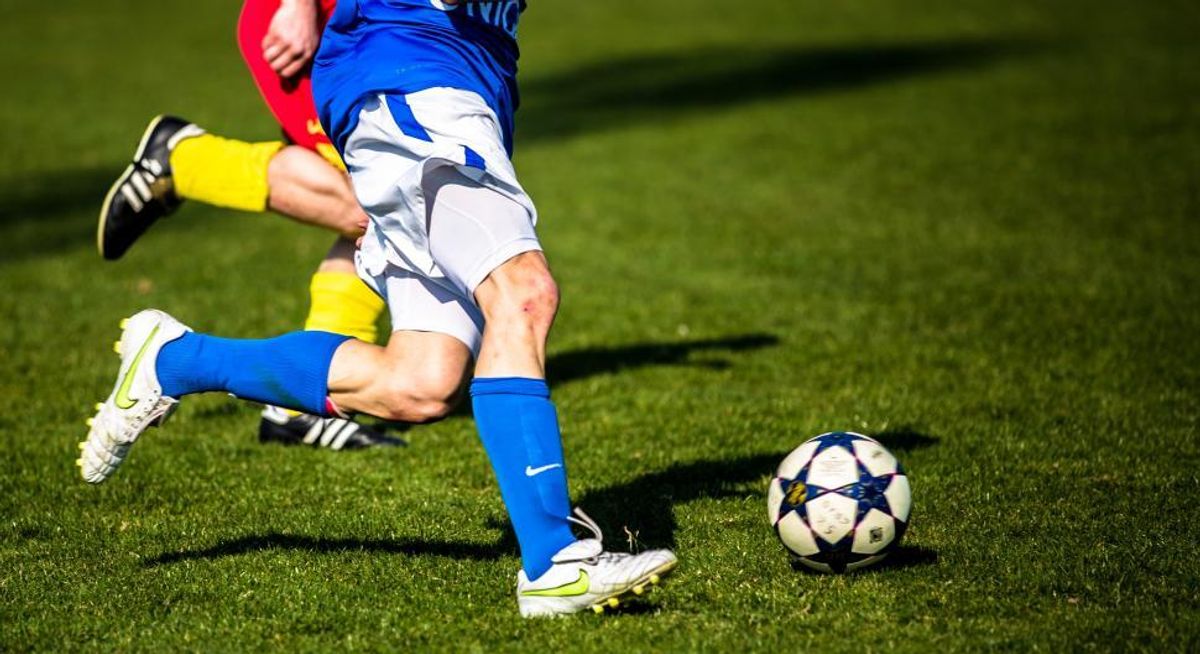
Soccer is a beautiful game that requires a combination of skill, technique, and precision. In this article, we will explore the ultimate tricks to improve your soccer skills, focusing on mastering ball control, precision passing, and effective shooting. Whether you’re a beginner or a seasoned player, these tips will help elevate your game to the next level.
Key Takeaways
- Practice dribbling techniques regularly to improve ball control
- Work on your first touch through drills to enhance control and accuracy
- Master turning skills to outmaneuver opponents
- Focus on short pass accuracy for quick ball movement
- Learn long pass techniques for effective distribution
Mastering Ball Control
Dribbling Techniques
As we delve into the art of dribbling, it’s crucial to recognize the moments that call for a deft touch and those that demand a rapid burst of speed. Mastering the balance between the two is essential for outmaneuvering opponents on the pitch. To enhance our dribbling prowess, we’ve outlined a series of exercises designed to improve agility and ball handling.
- Practice close ball control by weaving through cones.
- Develop quick changes of direction with figure-eight drills.
- Increase your speed while maintaining control with timed sprints.
Remember, the key to effective dribbling isn’t just speed; it’s the ability to change pace and direction unpredictably.
Incorporating these drills into our regular training sessions will not only boost our confidence in 1v1 situations but also our overall ability to maintain possession under pressure. By consistently challenging ourselves with these techniques, we’ll become more adept at determining when and how to engage in 1v1 dribbling, turning it into a strategic advantage during matches.
First Touch Drills
To excel in soccer, we must give special attention to our first touch. This skill is crucial as it sets the tone for our subsequent moves and can mean the difference between retaining possession and losing the ball. Our first touch should be as precise as a surgeon’s scalpel, guiding the ball exactly where we want it.
Here’s a simple drill sequence to enhance our first touch:
- Start with the ball at your feet, standing still.
- Gently tap the ball forward with the inside of your foot.
- As the ball rolls, move to meet it and control it with the opposite foot.
- Repeat this process, alternating feet, and gradually increase the distance and speed.
Consistency is key. Dedicate time each day to these drills, and you’ll notice significant improvements in your ball handling skills.
Remember, the ultimate guide to individual soccer drills and training suggests that these drills can be practiced at home and individually, designed to improve various aspects of a player’s game, from ball control to endurance.
Turning Skills
After mastering the basics of ball control, we turn our attention to the art of changing direction swiftly with the ball. Turning is not just about avoiding opponents; it’s about creating space and opportunities for playmaking. To excel in turning skills, we follow a structured approach:
- Step 1: Master the inside and outside cuts. These are the foundation of effective turning.
- Step 2: Practice the Cruyff Turn, a classic move that deceives opponents and opens up the field.
- Step 3: Incorporate turns into your dribbling drills, making them second nature.
Consistent practice of these steps will not only improve your turning ability but also enhance your overall ball control.
Remember, the key to effective turning is to keep the ball close and maintain a low center of gravity. This ensures quick pivots and less chance for defenders to steal the ball. By integrating turning drills into our regular training sessions, we ensure that our movements remain sharp and unpredictable on the pitch.
Precision Passing
Short Pass Accuracy
To excel in soccer, we must prioritize the accuracy of our short passes. Short-passing games are the go-to soccer passing drills for honing accuracy. These exercises involve circulating the player’s ball within confined spaces, which is crucial for match situations where space and time are limited.
Accuracy in passing is not just about reaching your teammate; it’s about ensuring they receive the ball in the best possible position to continue the play. Here’s a simple drill we use to sharpen our short pass accuracy:
- Position two cones 10 yards apart.
- Partner up and pass the ball back and forth, aiming to hit the base of the cone.
- Count successful passes and set a target to beat for the next round.
Consistency is key. Aim to maintain a rhythm and watch as your pass success rate climbs.
Remember, the best players make passing look effortless, but it’s the result of countless hours of practice. Let’s master the pitch together, one pass at a time.
Long Pass Techniques
To excel in soccer, we must master the art of the long pass. This skill is crucial for switching the play and creating opportunities from a distance. The key to a successful long pass is the combination of vision, technique, and timing.
- First, position your body correctly; your non-kicking foot should be alongside the ball, pointing in the direction you want the ball to go.
- Next, strike the ball with the instep of your foot, keeping your ankle firm.
- Follow through with your kicking leg, making sure to keep your body balanced.
Remember, the power of the pass comes from the swing of your leg and not just from your foot. A well-executed long pass can be a game-changer, breaking through defensive lines and setting up scoring opportunities.
Practicing with a partner or in a team setting can help refine your technique. Here’s a simple drill to improve your long passing:
- Partner up and stand approximately 30 yards apart.
- One player sends a long pass to the other, aiming to land the ball at their partner’s feet.
- The receiving player controls the ball and sends it back.
- Repeat, gradually increasing the distance as your accuracy improves.
Through Ball Mastery
After mastering the art of the long pass, we turn our focus to the precision and foresight required for through ball mastery. The ability to anticipate a teammate’s run and execute a perfect through ball can dismantle even the tightest defenses.
To excel in this skill, we must practice timing and vision. Here’s a simple drill sequence to enhance our through ball capabilities:
- Partner up and practice passing into space, leading your teammate as they make runs.
- Gradually increase the distance and complexity of the runs.
- Introduce defenders to simulate match conditions.
Consistent practice under varying pressure conditions will sharpen our decision-making and execution.
Remember, the key to a successful through ball is not just the pass itself, but also the movement off the ball. Encourage teammates to communicate and make intelligent runs, creating opportunities for that incisive pass.
Effective Shooting
Shooting Accuracy
To excel in soccer, shooting accuracy is a skill we must constantly refine. It’s not just about hitting the target; it’s about placing the ball where the goalkeeper can’t reach it. We focus on several fundamentals to enhance our precision in front of the goal. These include proper body positioning, foot placement, balance, and striking technique. By mastering these basics, we can lay a solid foundation for improving our shooting accuracy.
Consistent practice is key to making progress. We recommend setting up drills that simulate match conditions to get the most out of your training sessions.
Here’s a simple drill to start with:
- Place cones in each corner of the goal to act as targets.
- Practice shooting from different angles and distances.
- Keep track of your successful shots to measure improvement over time.
Remember, the goal is to make every shot count by placing it beyond the goalkeeper’s reach. With dedication and the right techniques, we’ll see a significant improvement in our ability to score.
Powerful Strikes
To unleash powerful strikes, we must focus on technique as much as on strength. A well-executed shot with proper body mechanics can generate immense power without the need for excessive force. We start by positioning our non-kicking foot alongside the ball, ensuring it points towards our target. This sets the foundation for a potent strike.
- Plant your non-kicking foot firmly on the ground
- Swing your kicking leg through, striking the ball with the laces
- Follow through towards the target to maintain power and direction
Consistency is key when practicing powerful strikes. It’s not just about hitting the ball hard; it’s about hitting it correctly, time after time. To track our progress, we can use the following table:
| Attempt | Power (out of 10) | Accuracy |
|---|---|---|
| 1 | 7 | On target |
| 2 | 8 | Off target |
| 3 | 9 | On target |
Remember, the power of a strike also comes from the core and leg muscles. Regular strength training can significantly enhance the force behind our shots.
By dedicating time to these exercises and maintaining a focus on our body mechanics, we can start to see a marked improvement in the power of our strikes. Let’s keep pushing our limits and refining our technique to become formidable strikers on the pitch.
Finishing Techniques
After perfecting our finishing techniques, we’ve come to understand that the true art of scoring is not just about power, but also about precision and timing. The moment of striking the ball is critical, and it’s essential to remain composed under pressure.
To translate our skills into successful goal-scoring opportunities, we must also master the art of soccer crossing. A well-executed cross can dismantle even the tightest defenses. Here’s a simple breakdown of effective crossing strategies:
- Ball possession and immediate recovery
- Lateral free kick: long ball on the second post
- Corner kick with three-player combination
Remember, the key to great finishing is not just in the strike itself, but in the buildup and delivery of the ball.
Incorporating these elements into our training regime will ensure that we’re not just shooting, but we’re scoring. The drills we practice aim to replicate match scenarios, from a lateral free kick to a corner kick routine, ensuring that when the moment comes, we’re ready to finalize with confidence.
Conclusion
In conclusion, mastering the ultimate tricks to improve your soccer skills is essential for any aspiring player. By incorporating the techniques and strategies discussed in this article, you can elevate your game to the next level. Remember, practice makes perfect, and with dedication and perseverance, you can achieve your goals on the field. Stay updated with Soccer Rondo for more tips, tricks, and reviews to enhance your soccer knowledge and performance.
Frequently Asked Questions
What are some basic dribbling techniques to improve ball control?
Some basic dribbling techniques to improve ball control include using the inside and outside of your foot, keeping the ball close to your body, and practicing changes in direction.
How can I improve my first touch in soccer?
You can improve your first touch in soccer by focusing on receiving the ball with the correct part of your foot, cushioning the ball upon impact, and practicing various receiving drills.
What are turning skills in soccer and why are they important?
Turning skills in soccer refer to the ability to quickly change direction with the ball. They are important for evading defenders, creating space, and maintaining possession of the ball.
How can I enhance my short pass accuracy in soccer?
To enhance your short pass accuracy in soccer, focus on proper technique, maintain eye contact with your target, and practice passing drills to improve precision.
What are some key techniques for executing long passes in soccer?
Key techniques for executing long passes in soccer include using the instep of your foot, adjusting the power and trajectory of the pass, and anticipating the movement of your teammates.
How can I master the art of delivering through balls in soccer?
To master the art of delivering through balls in soccer, work on timing and weight of the pass, communicate effectively with your teammates, and anticipate the runs of attacking players.