
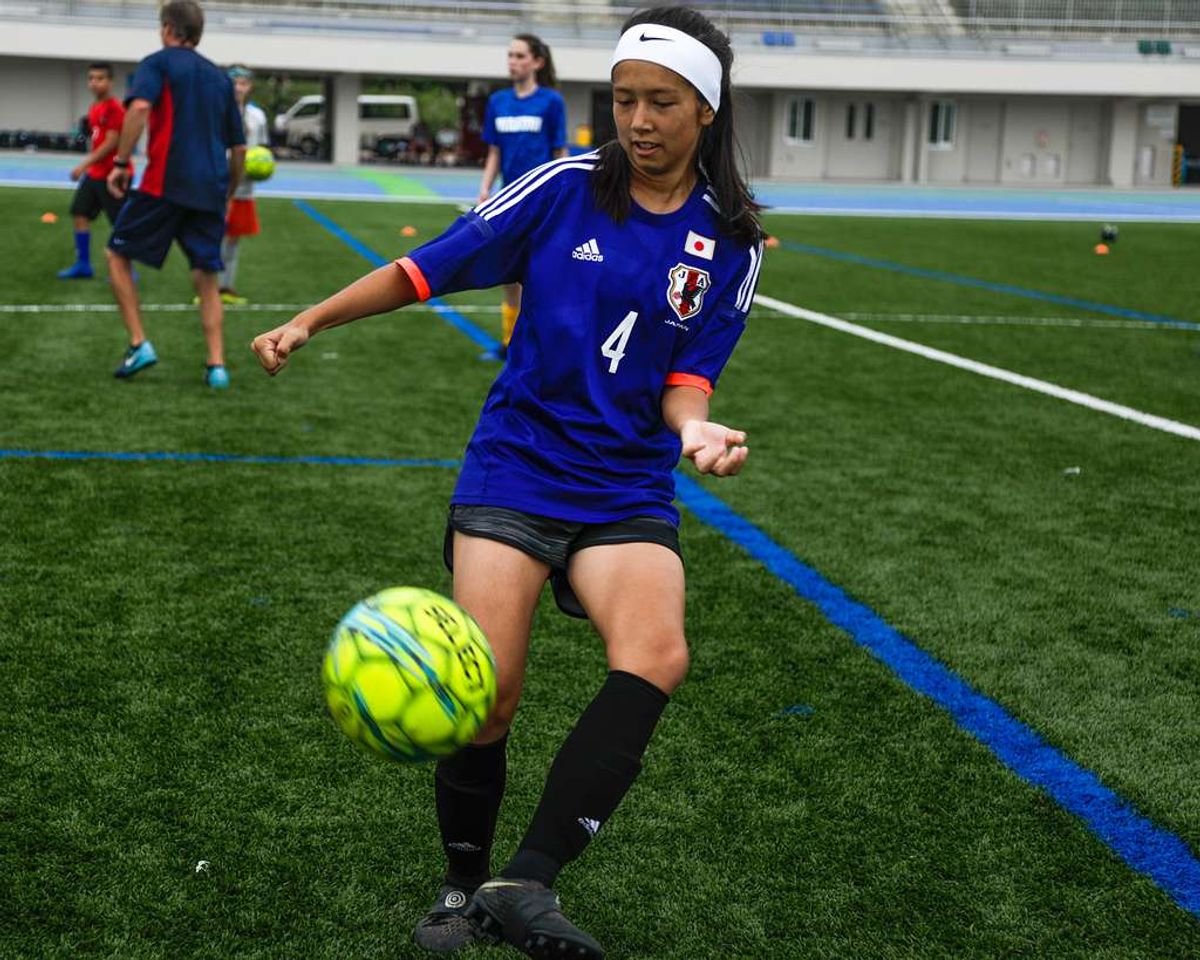
Soccer training is essential for athletes to perform at their best during the big game. From effective warm-up routines to tactical game plans and mental preparation techniques, every aspect plays a crucial role in preparing for the game. Here are the key takeaways from the training strategies outlined in this article:
Key Takeaways
- Dynamic stretching, agility drills, and ball control exercises are key components of an effective warm-up routine.
- Set piece strategies, defensive formations, and attacking patterns are important aspects of a tactical game plan.
- Visualization exercises, positive affirmations, and focus and concentration techniques enhance mental preparation.
- Endurance training, strength workouts, and speed and power drills are essential for physical conditioning regimen.
- Stay informed with Soccer Rondo blog for tips, tricks, reviews, and explanations about the sport and latest equipment.
Effective Warm-Up Routine
Dynamic Stretching
As we prepare for the big game, we understand the importance of starting our warm-up with dynamic stretching. This type of stretching is crucial for preparing our muscles for the intense activity ahead. Unlike static stretching, dynamic stretches involve movement and are designed to mimic the actions we’ll be performing on the pitch.
Dynamic stretching not only warms up the muscles but also enhances our range of motion, which is vital for executing precise soccer skills. Here’s a quick list of dynamic stretching exercises that we incorporate into our routine:
- Free squats to mobilize the hip, knee, and ankle joints while activating the quads and glutes.
- Lunge dips to further mobilize the hips and stretch the leg muscles.
Remember, the goal of dynamic stretching is to increase blood flow and muscle temperature, which can help reduce the risk of injury and improve performance.
By integrating these exercises into our warm-up, we ensure that our bodies are primed and ready for the tactical and physical demands of the game.
Agility Drills
After warming up our muscles with dynamic stretching, we focus on enhancing our agility—a crucial attribute for any soccer player. Agility drills are essential for improving quick directional changes, necessary for dodging opponents and maintaining possession of the ball.
- Side-step cutting
- Cone zig-zags
- Ladder drills
These exercises not only boost our agility but also our balance and coordination. We perform each drill with intensity and precision, knowing that every step we take translates to a more fluid performance on the pitch.
Consistency in these drills is key. We aim to integrate them into our regular training sessions to see significant improvements in our game.
Ball Control Exercises
After honing our dynamic stretching and agility, we focus on ball control exercises. Maintaining possession under pressure is crucial to our success in the big game. We practice various drills that simulate match conditions, ensuring that our touch is precise and confident.
- Dribbling through cones at varying speeds
- Receiving and turning with the ball against passive resistance
- Passing accuracy over short and long distances
Mastery of ball control allows us to dictate the pace of the game and reduces the likelihood of turnovers. It’s about being comfortable with the ball at our feet, regardless of the situation on the pitch.
We dedicate a portion of our training to these exercises, understanding that the ability to maneuver the ball skillfully is a fundamental aspect of soccer. Our goal is to make ball control second nature, so that during the game, we can focus on the larger tactical picture.
Tactical Game Plan
Set Piece Strategies
In our quest for victory, we recognize that set pieces are a critical component of the game. We’ve developed a simple guide to set piece strategies that can be the difference between a win and a loss. When it comes to effective strategies in football, set pieces are just as important as choosing the lineup or perfecting team talk at half-time.
Mastery of set pieces gives us a significant advantage over our opponents. It’s about precision, timing, and the element of surprise.
To ensure we’re fully prepared, we focus on several key types of set pieces:
- Free Kicks: Positioning and execution drills for direct and indirect kicks.
- Corners: Assigning roles and practicing routines to maximize scoring opportunities.
- Penalties: Building confidence and consistency in our penalty takers.
- Throw-ins: Utilizing throw-ins as an opportunity to launch attacks or maintain possession.
Each type of set piece requires a unique approach and dedicated practice. By drilling these scenarios repeatedly, we build an instinctive response that can be the deciding factor in crucial moments.
Defensive Formations
In preparing for the big game, we understand that a solid defense is the foundation of a successful team. Our focus on defensive formations is crucial, as it allows us to adapt to the opposing team’s tactics and maintain control of the game. We emphasize the importance of communication among defenders, ensuring that everyone is aware of their roles and responsibilities.
- The 4-4-2 formation provides balance and width.
- A 5-3-2 setup offers extra security at the back.
- The 3-5-2 system allows for flexibility in transition.
By drilling these formations repeatedly in training, we engrain the positional discipline and teamwork necessary to execute them flawlessly during the match. This not only prepares us to defend against a variety of attacking styles but also builds the confidence needed to operate as a cohesive unit.
Attacking Patterns
In developing our attacking patterns, we focus on creating unpredictable movements that can disorient the opposition’s defense. We prioritize fluidity and creativity, ensuring that each player understands their role in the orchestrated chaos we aim to produce on the pitch.
Our strategy hinges on quick passes and constant movement, making it difficult for defenders to mark our players.
To execute this effectively, we drill the following key movements:
- Overlapping runs by full-backs
- Swift one-two combinations between midfielders and strikers
- Wingers cutting inside to open up space for overlapping midfielders
- False nine movements to draw out central defenders
Each pattern is practiced until it becomes second nature, allowing us to adapt and improvise as the game unfolds.
Mental Preparation Techniques
Visualization Exercises
We’ve always known the importance of a strong mental game, and that’s where visualization exercises come into play. By imagining ourselves successfully executing plays and overcoming challenges, we strengthen our mental fortitude and readiness for the match.
Visualization is not just about seeing success; it’s about feeling it in every fiber of our being. We practice envisioning different game scenarios, from scoring the winning goal to making a crucial save, to build our confidence and reduce game-day anxiety.
Visualization exercises should be tailored to individual needs and focus areas. It’s not a one-size-fits-all approach, but a personalized strategy to enhance performance.
Here’s a simple framework we follow:
- Find a quiet space to concentrate.
- Close your eyes and take deep breaths to relax.
- Picture a specific game situation.
- Feel the emotions and physical sensations of that moment.
- Repeat the process regularly, especially before a game.
Positive Affirmations
In the lead-up to the big game, we understand the power of positive affirmations to enhance our team’s self-belief and focus. We recite affirmations together to foster a shared vision of success.
- I am confident in my skills and abilities.
- We are a strong team, united and determined.
- Every challenge is an opportunity to excel.
By repeating these affirmations, we create a positive mindset that is crucial for peak performance. This mental fortitude becomes our shield against pressure and our weapon to seize victory.
We also personalize affirmations to address individual goals and challenges, ensuring that each player is mentally equipped to contribute to our collective triumph.
Focus and Concentration
We understand the importance of focus and concentration in the lead-up to the big game. It’s not just about physical readiness; mental sharpness is equally crucial. We incorporate techniques such as meditation and mindfulness training to enhance our concentration. These practices help us stay present during the game and maintain a clear mind amidst the chaos of the match.
By regularly engaging in concentration exercises, we build our mental resilience, allowing us to remain focused under pressure and recover quickly from distractions.
To ensure we’re all on the same page, we follow a simple routine:
- Begin with 5 minutes of deep breathing to center ourselves.
- Move on to 10 minutes of visualization, picturing successful plays and positive outcomes.
- Conclude with a brief session of mindfulness, observing our thoughts and sensations without judgment.
Physical Conditioning Regimen
Endurance Training
To improve soccer endurance and resistance, we focus on a regimen that includes proper breathing techniques, interval training, and high-intensity exercises. These methods are designed to help our players last throughout the full 90 minutes of a match, maintaining a high level of performance from start to finish.
Proper breathing is fundamental to maximizing oxygen intake and supporting sustained effort on the field. We practice this through various running drills and during our regular training sessions to ensure it becomes second nature.
Our interval training consists of:
- Short bursts of intense activity
- Periods of lower intensity or rest
- Repetition of these cycles to mimic the demands of a match
This approach not only boosts endurance but also enhances recovery during the game. High-intensity exercises, on the other hand, are tailored to increase the players’ ability to perform at their peak over longer periods.
By integrating these elements into our training, we build a foundation that prepares our team for the physical demands of the big game. Consistency in this regimen is key to seeing significant improvements in endurance and overall fitness levels.
Strength Workouts
After building our endurance, we focus on enhancing our strength to withstand the physical demands of the game. Strength workouts are crucial for maintaining high performance levels throughout the match, especially when fatigue sets in.
- Squats for lower body power
- Bench presses to improve upper body strength
- Deadlifts for core stability and leg strength
Consistency in our strength regimen ensures that we can hold our ground against opponents, shield the ball effectively, and maintain our energy during intense moments.
We track our progress through a simple table, noting the weights lifted and repetitions completed:
| Exercise | Weight | Reps |
|---|---|---|
| Squats | 100kg | 10 |
| Bench Press | 80kg | 8 |
| Deadlifts | 120kg | 6 |
By integrating strength workouts into our training, we not only build muscle but also enhance our overall athleticism, which is vital for executing our tactical game plan.
Speed and Power Drills
After focusing on our endurance and strength, we recognize the importance of speed and agility on the soccer field. We must integrate speed and power drills into our training regimen to ensure peak performance during the game. These drills are designed to enhance our explosive power and sprinting capabilities, which are crucial during those defining moments of a match.
To maximize our speed, we don’t rely solely on the soccer ball. We incorporate a variety of exercises that challenge our body’s quickness and force. For instance, the 10m Fly is an excellent drill for developing pure speed, and we make it a point to include a few sprints each week. It’s essential to measure our progress with an accurate Speed Timing System, as Coach Mike always emphasizes.
Our training sessions are meticulously planned to balance intensity with adequate recovery. We understand that rest is just as important as the drills themselves to prevent injuries and maintain a high level of performance.
Here’s a quick overview of our weekly speed and power routine:
- Monday: Acceleration sprints and plyometric circuits
- Wednesday: Hill sprints and resistance training
- Friday: Agility ladder drills and the 10m Fly
By alternating between these exercises, we ensure that our bodies are always adapting and improving, ready to outpace the opposition when it matters most.
Conclusion
In conclusion, effective soccer training strategies are essential for preparing players for the big game. By incorporating a combination of technical drills, tactical exercises, physical conditioning, and mental preparation, players can enhance their skills and performance on the field. Soccer Rondo, a blog dedicated to educating users about the sport and the latest equipment, provides valuable insights and resources to help players improve their game. With dedication, hard work, and the right training approach, players can elevate their game and achieve success in soccer.
Frequently Asked Questions
What is the importance of a dynamic warm-up routine before a soccer game?
A dynamic warm-up routine helps to increase blood flow, improve flexibility, and prepare the muscles for the physical demands of the game.
How can agility drills benefit a soccer player’s performance on the field?
Agility drills help to enhance a player’s speed, coordination, and quick decision-making abilities during gameplay.
What are ball control exercises and how do they contribute to a player’s skills?
Ball control exercises focus on improving a player’s touch, dribbling, and passing accuracy, which are essential for maintaining possession and creating scoring opportunities.
Why is it important for a soccer team to have set piece strategies in place?
Set piece strategies help teams capitalize on scoring opportunities from free kicks, corner kicks, and throw-ins, giving them an advantage over the opposition.
How do defensive formations play a role in a team’s overall game plan?
Defensive formations dictate how players position themselves on the field to maintain defensive shape, cover spaces, and prevent the opposition from scoring.
What are attacking patterns and how do they influence a team’s offensive tactics?
Attacking patterns are predetermined movements and passes that players execute to create goal-scoring chances and break down the opponent’s defense.