
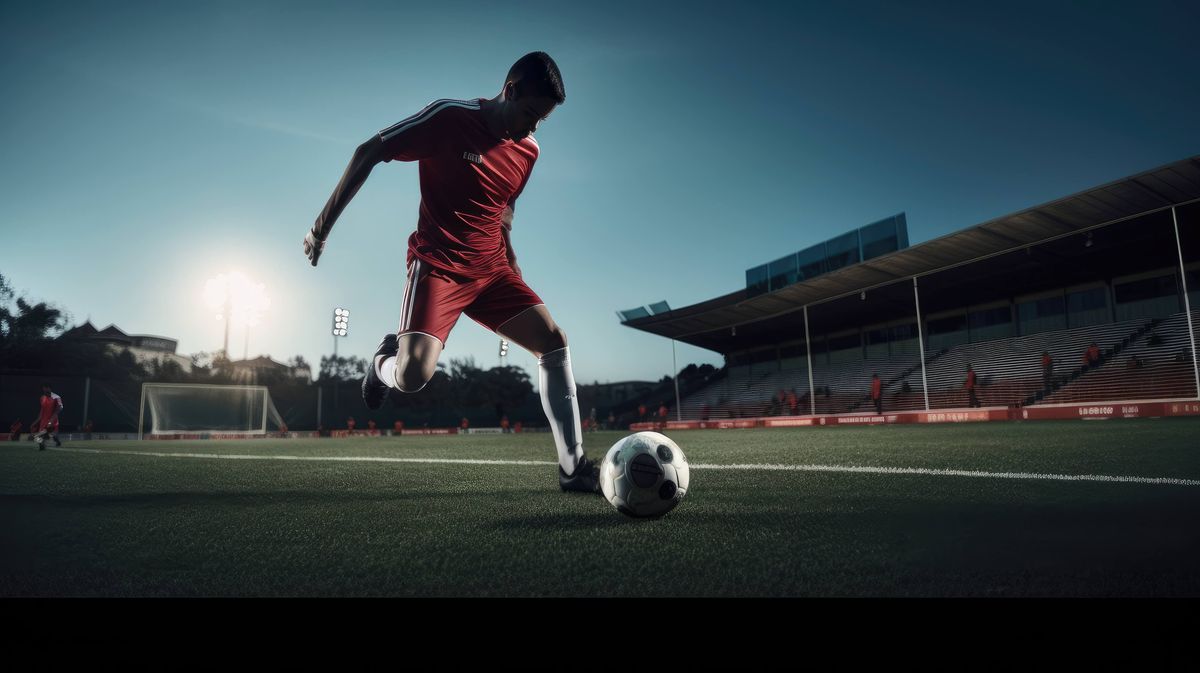
Soccer players looking to enhance their technical skills can benefit greatly from daily drills focusing on mastering ball control, precision passing, and goal scoring strategies. By incorporating specific exercises and techniques into their training routine, players can improve their overall performance on the field and elevate their game to the next level. This article provides a structured approach to daily drills that serious soccer players can follow to sharpen their skills and excel in various aspects of the game.
Key Takeaways
- Consistent practice of dribbling techniques and ball handling drills is essential for mastering ball control.
- Precision passing requires mastering short pass accuracy, long pass techniques, and one-touch passing.
- Goal scoring strategies can be enhanced by improving shooting accuracy, finishing under pressure, and mastering header techniques.
- Daily drills focusing on ball control, passing precision, and goal scoring strategies are crucial for serious soccer players.
- Incorporating these daily drills into your training routine can help you elevate your game and improve your overall performance on the field.
Mastering Ball Control
Dribbling Techniques
As we delve into the art of dribbling, it’s crucial to recognize the moments that call for a deft touch or a rapid change of pace. Mastering 1v1 situations is essential, and it starts with understanding when to take on an opponent. We’ve outlined a few steps to help you make these split-second decisions.
- Assess the defender’s position: Is there space behind them to exploit?
- Gauge your support: Are teammates available for a pass if the dribble doesn’t succeed?
- Know your strengths: Play to your dribbling style, whether it’s speed or finesse.
Remember, the goal is not just to get past the defender, but to do so in a way that puts you or your team in a better position to attack.
Incorporating these techniques into your daily drills will build the muscle memory and confidence needed to execute under pressure. Practice varying your dribble speed and using both feet to navigate through tight spaces. This will not only improve your control but also your ability to read the game and make intelligent plays.
Ball Handling Drills
After mastering the basics of dribbling, we turn our attention to ball handling drills. These exercises are crucial for developing a player’s touch and control over the ball. We focus on drills that can be practiced both on the pitch and at home, ensuring that our skills remain sharp regardless of the setting.
Consistency is key in ball handling. To track progress, we use the following simple table:
| Day | Drill | Duration | Notes |
|---|---|---|---|
| Mon | Solo Juggling | 15 min | Focus on weak foot |
| Tue | Cone Dribbles | 10 min | Increase speed |
| Wed | Wall Passes | 20 min | Use both feet |
By dedicating time each day to these drills, we not only improve our ball control but also our overall endurance and agility.
Remember, the goal is to make the ball an extension of our own body. Through repetition and dedication, we’ll see significant improvements in our ability to maneuver the ball under pressure, setting the foundation for more advanced techniques.
Turning Skills
After mastering the basics of ball control, we turn our attention to the art of turning on the pitch. Effective turning is crucial for evading defenders and creating space for that perfect pass or shot. We’ve developed a series of drills that focus on agility and spatial awareness, ensuring that players can pivot with precision.
To excel in turning, players must combine speed with balance. Our drills are designed to enhance both, providing a foundation for advanced maneuvers.
Here’s a simple drill we call the ‘Corner Trickery Soccer Drill‘, inspired by the clever moves young soccer players adore. It’s not just about the fun; it’s about embedding those sharp turns into muscle memory.
- Start by dribbling towards the corner at a moderate pace.
- As you approach the corner, perform a quick feint to throw off imaginary defenders.
- Execute a sharp turn, using the inside or outside of your foot, depending on the drill variation.
- Accelerate away from the corner, keeping the ball close to your feet.
This drill encapsulates the essence of soccer—combining technical skill with the joy of the game. It’s a reminder that while we train hard, we never forget the love for the sport that brought us here.
Precision Passing
Short Pass Accuracy
To excel in the game, we must hone our short pass accuracy. This skill is fundamental for maintaining possession and dictating the pace of play. We focus on precision and timing to ensure that every pass counts. A well-executed short pass can be the difference between keeping the play alive or losing the ball to the opposition.
Consistency is key in mastering short passes. Here’s a simple drill we use to improve our accuracy:
- Pair up with a teammate and stand 10 yards apart.
- Pass the ball back and forth, aiming to hit a specific target area.
- Gradually increase the distance as your accuracy improves.
- Keep track of successful passes to measure progress.
Remember, the goal is to make your passes instinctual and reliable under any match condition.
Incorporating these football short passing drills into our routine ensures that we develop a keen sense of spatial awareness and a sharp eye for the best passing lanes. By practicing diligently, we transform our short passing game into a powerful tool on the pitch.
Long Pass Techniques
Mastering the long pass is crucial for switching the play and creating opportunities from a distance. We focus on the technique that allows us to deliver the ball accurately over a long range. Positioning and body posture are key elements in executing a successful long pass.
- Start with the correct stance, with your non-kicking foot placed beside the ball pointing towards your target.
- Swing your kicking leg through, making contact with the ball’s lower half to achieve height and distance.
- Follow through with your kicking leg, ensuring your body leans back slightly to avoid under-hitting the pass.
Consistency in long passing drills will build the muscle memory needed for precise execution during a match.
Remember, the power behind the pass comes from the momentum of your run-up and the swing of your leg, not just from your foot. Practice with various ball weights and under different weather conditions to adapt your technique accordingly.
One-Touch Passing
In the fast-paced game of soccer, mastering one-touch passing is essential for maintaining the flow and tempo of play. We must be able to make quick decisions and execute accurate passes without hesitation. To develop this skill, we focus on the following drills:
- Pass and Move: Players pass the ball and immediately move to a new position, reinforcing the habit of constant mobility.
- Triangle Drills: Three players form a triangle and practice one-touch passes, emphasizing precision and timing.
- Wall Work: Using a wall or rebounder to practice one-touch passes helps improve reaction time and ball control.
The key to one-touch passing lies in the anticipation of the ball’s movement and the positioning of the body to facilitate a fluid motion.
Remember, the goal is to keep the ball moving with minimal touches. This not only speeds up the game but also makes it more difficult for opponents to predict and intercept passes. Consistent practice of these drills will enhance our team’s synergy and our ability to control the game.
Goal Scoring Strategies
Shooting Accuracy
To excel in goal scoring, we must focus on the precision of our shots. Consistency is key in hitting the target, and it’s something we can develop with regular practice. A variety of drills are essential for improving our shooting accuracy, ensuring we’re prepared for any scenario on the pitch.
- Start with stationary shooting from different angles.
- Progress to moving targets to simulate in-game situations.
- Incorporate passing sequences that culminate in a shot on goal.
Remember, the best strikers are not always the ones who hit the hardest, but those who place their shots with the utmost precision.
By integrating these exercises into our daily training, we can enhance our ability to score from anywhere in the attacking third. It’s not just about the number of goals; it’s about the quality and the clutch moments when we make them count.
Finishing Under Pressure
When we’re in the final third, the pressure is on to convert chances into goals. Keeping calm is crucial when we’re faced with the opportunity to score. We focus on breathing techniques and mental preparation to maintain composure in front of the net.
Positioning is key to getting the best shot on goal, even when defenders are closing in. We practice finding pockets of space and anticipating where the ball will be, ensuring we’re always ready to strike.
To enhance our finishing under pressure, we simulate match conditions in training. This includes crowd noise, limited time on the ball, and physical fatigue.
Here’s a simple drill sequence to improve our composure:
- Start with a light jog to the edge of the box.
- Receive a pass from a teammate while on the move.
- Control the ball and take a shot within three touches.
Remember, the key to finishing under pressure is to replicate the intensity and unpredictability of a real match. By practicing these drills regularly, we’ll be better equipped to handle the stress of game-day situations and turn those critical moments into triumphant goals.
Header Techniques
We’ve covered the fundamentals of goal scoring, but mastering header techniques is crucial for capitalizing on aerial opportunities. Positioning is key; we must anticipate the ball’s trajectory and position ourselves accordingly to meet it with precision.
- Start by practicing your timing, jumping just as the ball approaches.
- Focus on the ball’s contact point, aiming to hit it with your forehead.
- Work on directing the ball by adjusting the angle of your head upon impact.
Consistent practice will not only improve your accuracy but also your confidence in aerial duels. Remember, headers are not just about power; they’re about finesse and control.
To track our progress, let’s keep a simple record of our header drills:
| Date | Drill Type | Successful Headers |
|---|---|---|
| 04/10/2023 | Set Piece Crosses | 15 |
| 04/11/2023 | Open Play Crosses | 12 |
| 04/12/2023 | Defensive Clearances | 20 |
By maintaining this log, we can identify patterns in our performance and make targeted improvements. Let’s keep pushing our limits and refining our header techniques to become a formidable force in the air.
Conclusion
In conclusion, daily drills are essential for serious soccer players looking to improve their technical skills. By incorporating these exercises into your routine, you can enhance your performance on the field and take your game to the next level. Stay updated with Soccer Rondo for more tips, tricks, and equipment reviews to continue your soccer journey with confidence.
Frequently Asked Questions
What are some key dribbling techniques to focus on?
Some key dribbling techniques to focus on include the inside cut, outside cut, step-over, and drag back.
How can I improve my ball handling skills?
You can improve your ball handling skills by practicing juggling, dribbling through cones, and working on quick changes of direction.
What are turning skills and why are they important in soccer?
Turning skills refer to the ability to quickly change direction with the ball. They are important in soccer to evade defenders and create scoring opportunities.
How can I improve my short pass accuracy?
You can improve your short pass accuracy by focusing on technique, using the inside of your foot, and practicing short passing drills.
What are some tips for finishing under pressure in front of the goal?
Some tips for finishing under pressure include staying calm, keeping your eye on the ball, and practicing shooting under simulated game pressure.
How can I enhance my header techniques for better goal scoring opportunities?
You can enhance your header techniques by practicing heading drills, working on timing your jumps, and improving your positioning in the box.