
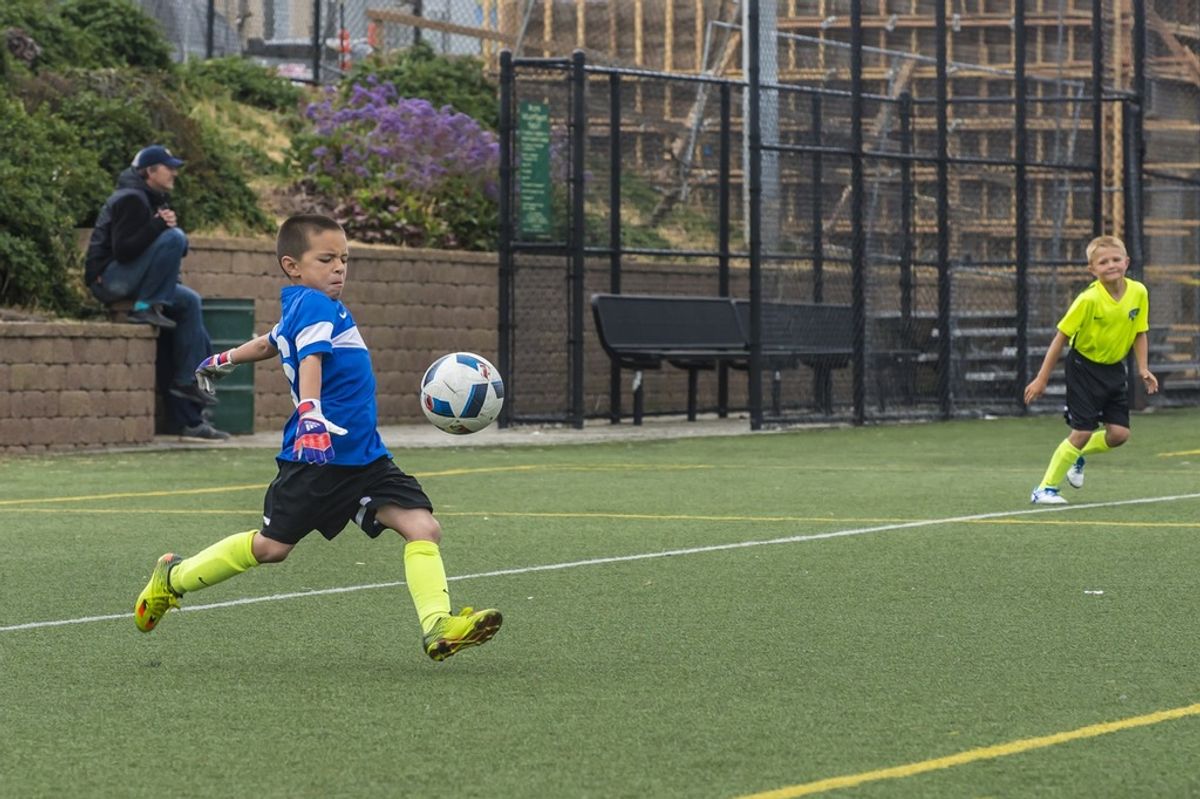
Soccer Rondo is a blog that aims to educate its readers on the art of soccer passing, focusing on ball control, passing accuracy, and creating space and opportunities. In this article, we will delve into the key techniques and tips for mastering the perfect soccer pass.
Key Takeaways
- Develop a strong first touch to control the ball effectively.
- Master the art of short and long passes for accuracy and precision.
- Utilize vision on the field to anticipate and execute passes effectively.
- Use movement to create space and opportunities for passing.
- Make quick decisions to exploit defensive gaps and create scoring opportunities.
Mastering the Art of Ball Control
Developing First Touch
In our journey to master the perfect soccer pass, we recognize the pivotal role of the first touch. This is the moment we first make contact with the ball, setting the stage for what comes next. A good first touch sets you up for success, whether that’s protecting the ball from an opponent, setting up a shot, or preparing for a pass.
To improve our first touch, we focus on a few key exercises:
- Practicing with different parts of the foot (inside, outside, laces)
- Receiving balls from various heights and speeds
- Working on touch in motion, simulating game scenarios
Consistency in practice leads to confidence on the field. By dedicating time to refine our first touch, we build a foundation that enhances every aspect of our game.
Remember, the first touch can dictate the tempo of play and our ability to control the game. It’s not just about stopping the ball dead; it’s about preparing for the next move with precision and intent.
Improving Dribbling Skills
As we delve into the nuances of dribbling, we recognize that it’s not just about the fancy footwork; it’s about knowing when to take on a defender one-on-one. Dribbling is an art that requires a blend of agility, control, and timing. To elevate our game, we focus on a few key aspects.
- First, we practice changes of direction and speed to keep defenders guessing.
- Second, we work on our balance and coordination to maintain control under pressure.
- Third, we emphasize the importance of keeping our head up to assess the field and make intelligent plays.
By consistently challenging ourselves in practice with these techniques, we become more confident in our ability to use 1v1 dribbling effectively during a match.
Understanding when to engage in a 1v1 situation is crucial. We ask ourselves, is there space to exploit? Is the defender off-balance? Answering these questions becomes second nature as we develop our dribbling skills. With each training session, we aim to make these decisions quicker and our movements more unpredictable to the opposition.
Understanding Body Positioning
After mastering the first touch and improving our dribbling skills, we turn our attention to the subtleties of body positioning. Proper body positioning is crucial for maintaining balance, shielding the ball, and preparing for a pass or shot. We must be aware of our stance, the angle of our feet, and the orientation of our body relative to the ball and opponents.
Body positioning is not just about where we stand, but also about the anticipation of the next play. It’s about being in the right place at the right time. For instance, as center midfielders, we are often the pivot of the team’s play, both offensively and defensively. Our positioning allows us to transition smoothly between these roles, intercept passes, and initiate attacks.
- Keep your body between the opponent and the ball to protect possession.
- Stay on the balls of your feet, ready to move in any direction.
- Orient your body to face the direction of intended play, allowing for quick and effective passes.
By constantly adjusting our body positioning, we not only make it difficult for opponents to predict our next move but also set ourselves up for success in executing that perfect pass or shot.
Enhancing Passing Accuracy
Mastering Short Passes
After we’ve honed our ability to control the ball, we turn our attention to the precision of our short passes. Short passing is the backbone of any successful team’s play, allowing for the maintenance of possession and the creation of attacking opportunities. To master this skill, we focus on the weight and timing of the pass, ensuring that the ball arrives at our teammate’s feet with the perfect pace.
Accuracy is key, and it’s achieved through consistent practice. Here’s a simple drill we use to sharpen our short passing:
- Partner up and stand about 10 feet apart.
- One player passes the ball to the other, aiming for a specific foot.
- The receiving player controls the ball with one touch, then returns the pass.
- Gradually increase the distance as accuracy improves.
Remember, the goal is not just to pass the ball, but to pass it in a way that it benefits your teammate, making it easy for them to control and use effectively.
Incorporating these practices into our routine has a profound impact on our gameplay. As we improve, we can adapt to varying playing conditions and execute powerful, accurate passes, much like the techniques for long-passing drills that focus on teaching players to gauge distances.
Perfecting Long Passes
To excel in long passing, we must combine precision and technique. We’ll focus on drills that enhance both aspects, ensuring that our passes not only reach their target but also provide the best advantage to our teammates.
- Start with the ‘Driven Ball’ drill, where you practice hitting a firm, low pass over a distance to a moving target.
- Move on to the ‘Lofted Pass’ exercise, which involves clearing the ball over an obstacle to a specific area.
- Finally, the ‘Cross-Field Switch’ drill trains you to accurately change the point of attack with a single, well-timed pass.
By consistently practicing these drills, we create muscle memory and a keen sense of distance, which are crucial for successful long passes. Remember, the key to a great long pass is not just the power behind the ball, but the control and foresight to place it exactly where it needs to be.
Utilizing Vision on the Field
We’ve all heard the saying, ‘Keep your head on a swivel.’ In soccer, this is more than just a cliché; it’s a fundamental skill for making effective passes. Good vision on the field allows us to anticipate our teammates’ movements and spot opportunities that others might miss. It’s not just about seeing the ball, but also about being aware of the space around us.
To enhance our peripheral vision, we can incorporate specific exercises into our training. For example, a warm-up exercise that combines passing and running with the ball can significantly improve our technique and stimulate our peripheral vision. This type of drill encourages us to be more aware of our surroundings while maintaining control of the ball.
By constantly scanning the field, we ensure that we’re ready to make a pass the moment an opportunity arises. This proactive approach to vision can be the difference between a good pass and a great one.
Remember, utilizing vision effectively is not just about the physical act of seeing. It’s about processing information quickly and making smart decisions. Here’s a simple list to help us practice:
- Keep your head up when dribbling
- Check your shoulders before receiving the ball
- Communicate with teammates to understand their positions
- Practice drills that require quick glances around the field
Creating Space and Opportunities
Using Movement to Find Open Space
We understand that the essence of creating opportunities on the field lies in our ability to find and utilize open space. Movement off the ball is crucial; it’s not just about where we are, but where we’re going to be. By constantly repositioning ourselves, we can exploit the dynamics of the game.
- Analyze the positioning of teammates and opponents
- Anticipate the flow of play
- Make intelligent runs that draw defenders away
By mastering the art of movement, we not only make ourselves available for a pass but also create more options for our teammates.
It’s a game of chess, with each player acting as a piece that must move strategically. The goal is to open up passing lanes and force the opposition to make difficult choices. When we move smartly, we embody the principle of ‘Positioning’ as highlighted in the phases of play in football, where players must create space and provide options.
Exploiting Defensive Gaps
In our quest to dominate the field, we’ve learned that exploiting defensive gaps is crucial. It’s about recognizing the space where a defender should be and isn’t, then using that knowledge to our advantage. To effectively exploit these gaps, we follow a few key steps:
- Identify the weak spots: Keep an eye on defenders who stray from their positions or seem less attentive.
- Communicate with teammates: Use verbal and non-verbal cues to signal the opportunity.
- Time your runs: Synchronize movements with the ball carrier to reach the open space at the right moment.
By mastering these steps, we not only create scoring opportunities for ourselves but also force the opposition to adjust their strategy, often leading to further mistakes we can capitalize on.
Remember, the best teams make this process look seamless. It’s not just about the individual brilliance but how well we connect as a unit to turn a defensive lapse into an offensive triumph.
Making Quick Decisions
In our journey to elevate our game, we’ve come to understand that making quick decisions on the field can drastically change the outcome of a match. It’s not just about physical skill; it’s about mental agility. We must train our minds to read the game, anticipate the next move, and react faster than our opponents.
To hone this skill, we can take inspiration from A-Champs, who suggest practicing by setting up scenarios where we need to make quick decisions based on the position of objects or markers around us. This type of training simulates real-game situations and sharpens our decision-making under pressure.
It’s crucial to remember that the best decisions are not always the most complex ones. Sometimes, the simplest option is the most effective.
Here’s a simple exercise to practice:
- Identify potential passing options before receiving the ball.
- Assign different actions to various markers (e.g., pass, shoot, dribble).
- As you approach the marker, make a split-second decision on the action to take.
By repeatedly performing exercises like these, we’ll develop a quicker thought process, which will translate into more fluid and confident play on the pitch.
Conclusion
In conclusion, mastering the perfect soccer pass requires dedication, practice, and attention to detail. By implementing the tips and techniques discussed in this article, you can improve your passing skills and elevate your performance on the field. Remember, practice makes perfect, and with consistent effort, you can become a master of the soccer pass. Stay tuned to Soccer Rondo for more valuable insights and updates on the sport and equipment!
Frequently Asked Questions
What is the importance of ball control in soccer?
Ball control is crucial in soccer as it allows players to maintain possession, make accurate passes, and create scoring opportunities.
How can I improve my passing accuracy in soccer?
To enhance passing accuracy, focus on technique, practice short and long passes, and work on improving your field vision.
Why is creating space important in soccer?
Creating space on the field enables players to have more time on the ball, make better decisions, and create scoring opportunities for themselves and their teammates.
What role does movement play in finding open space in soccer?
Movement is essential in soccer to create passing lanes, evade defenders, and position oneself to receive the ball in open space.
How can I make quick decisions on the soccer field?
To make quick decisions in soccer, players should anticipate the game, read the field, and have a good understanding of their teammates’ positioning.
What are some tips for utilizing vision on the soccer field?
To utilize vision effectively in soccer, scan the field regularly, communicate with teammates, and anticipate plays before they happen.