
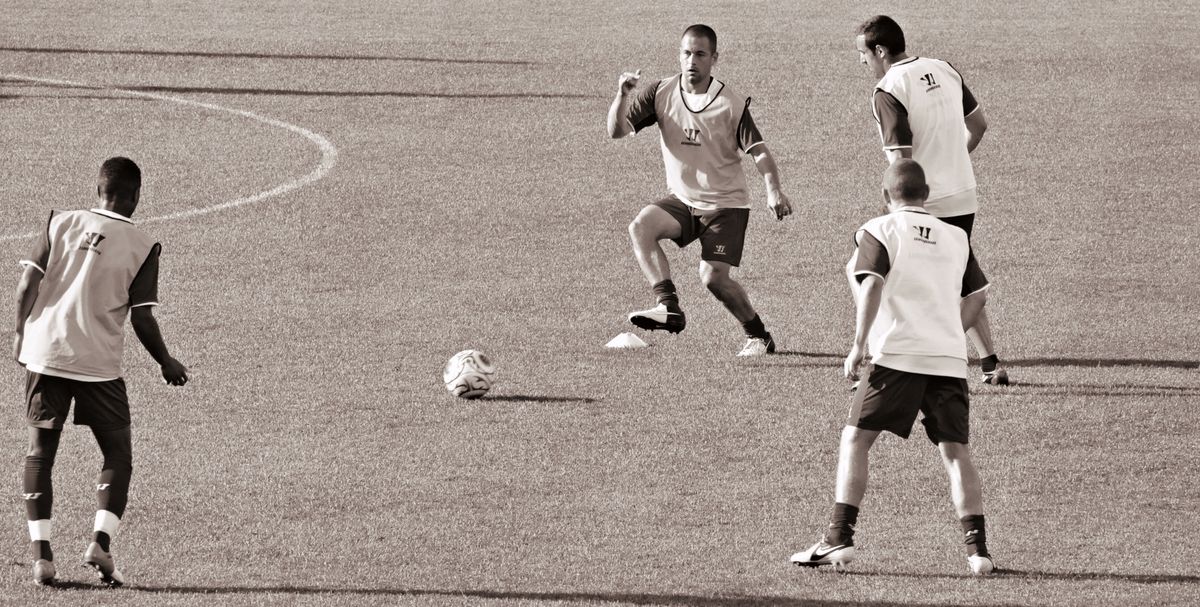
In the world of soccer, the ability to connect seamlessly with your teammates on the field can make a significant difference in the outcome of a game. This article delves into strategies to enhance on-field connections, focusing on building trust through communication, understanding movement patterns, and enhancing technical skills.
Key Takeaways
- Clear communication and active listening are essential for building trust among teammates.
- Anticipating runs and creating space can lead to more effective on-field connections.
- Improving first touch control and precision passing can elevate your passing game.
- Feedback exchange and timing passes accurately are crucial for successful on-field connections.
- Incorporating variety in passing techniques can keep opponents guessing and enhance team coordination.
Building Trust Through Communication
Clear Communication
In our quest to perfect on-field connections, we recognize the paramount importance of clear communication. It’s not just about what we say, but how we say it. We’ve distilled our approach into a few key strategies:
- Convey important points clearly and concisely.
- Use multiple modes of communication, such as verbal, visual, and physical cues.
- Be mindful of our tone, as it can greatly influence the message’s reception.
By ensuring that our intentions are unmistakable, we eliminate confusion and build a stronger team dynamic.
Consistency in our messaging reinforces understanding and trust among teammates. This is not just about the words we choose, but also about the frequency and context in which we communicate. A well-timed word can be as powerful as the most perfectly executed pass.
Active Listening
In our pursuit of passing perfection, we recognize that active listening is as crucial as clear communication. We must be attentive to our teammates’ verbal and non-verbal cues to truly understand their intentions on the field. This involves more than just hearing their calls for the ball; it’s about comprehending the subtleties of their body language and the context of the game situation.
- Pay attention to the speaker without interrupting
- Show that you are listening through body language and affirmations
- Reflect on what is being said and ask clarifying questions
- Respond appropriately, showing understanding or offering constructive feedback
By fostering an environment where everyone feels heard, we create a team dynamic that values each player’s perspective. This mutual respect translates into better on-field chemistry and more intuitive play.
Active listening is a skill that can be developed with practice and patience. It’s a commitment to fully engage with our teammates, which in turn, enhances our collective performance.
Feedback Exchange
After establishing clear communication and honing our active listening skills, we’ve set the stage for an effective feedback exchange. This is where we can truly refine our on-field connections. Feedback must be constructive and goal-oriented, ensuring that each player understands their role in improving the team’s performance.
- Begin with positive reinforcement to highlight what is working well.
- Address areas for improvement with specific, actionable suggestions.
- Encourage an open dialogue where all team members feel comfortable sharing their perspectives.
By fostering an environment where feedback is welcomed and valued, we create a culture of continuous improvement. This culture not only strengthens our individual skills but also solidifies our unity as a team, making us more formidable opponents on the field.
Understanding Movement Patterns
Anticipating Runs
In our quest to perfect on-field connections, we understand that anticipating runs is a pivotal aspect of the game. It’s about reading the game and being one step ahead, predicting where teammates will be and delivering the ball accordingly. This foresight requires not only a keen sense of observation but also a deep understanding of each player’s tendencies and the dynamics of the game.
To excel in this area, we’ve adopted a principle from one of the world’s leading football clubs. Inspired by Real Madrid CF, we focus on the concept of ‘Anticipate and play‘. The moment we regain possession, the importance of the first pass is paramount. It sets the tone for a potential counter-attack and can catch the opposition off-guard. Here’s a simple list to keep in mind when working on anticipating runs:
- Recognize the triggers for teammates’ runs
- Analyze the opposition’s defensive structure
- Communicate intentions with a gesture or a look
- Practice quick decision-making
By consistently applying these strategies, we’ve noticed a significant improvement in our ability to maintain possession and create scoring opportunities. The fluidity of our play has increased, and the connection between players has become more intuitive.
Creating Space
In our quest to master the art of passing, we recognize the importance of creating space. It’s not just about where we are on the field, but also about where we aren’t. By intelligently positioning ourselves, we force defenders to make difficult choices, opening up opportunities for our teammates.
To effectively create space, consider the following steps:
- Constantly scan the field to identify open areas.
- Use deceptive movements to mislead opponents.
- Communicate with teammates to orchestrate coordinated movements.
Creating space is as much a mental game as it is a physical one. It requires awareness, creativity, and the ability to predict the opponent’s next move.
Remember, the objective is to draw defenders away and provide passing options. This tactical maneuvering is a fundamental aspect of the game that can significantly enhance our team’s offensive capabilities.
Timing Passes
After mastering the art of anticipating runs and creating space, we must focus on the crucial aspect of timing our passes. The precision of our passing game hinges not only on where and how we pass the ball, but also on when. A well-timed pass can be the difference between maintaining possession and losing it, or even better, it can create a scoring opportunity.
To enhance our game, we incorporate technique drills that emphasize proper body positioning and the use of the inside of the foot for short passes, while reserving the instep for longer distances. This ensures that our passes are not only timely but also accurate and effective.
It’s essential to practice passing under varying degrees of pressure and at different speeds. This helps us adapt to the dynamic nature of a match, where the timing of each pass must be adjusted on the fly.
Here’s a simple drill sequence to improve our passing timing:
- Pass the ball back and forth with a partner, gradually increasing the distance.
- Introduce movement, where one partner moves to a new location after each pass.
- Add a defender to apply pressure, forcing quicker decision-making.
- Finally, simulate match conditions by varying the tempo and adding more players.
Enhancing Technical Skills
First Touch Control
We often emphasize the importance of a player’s first touch, as it sets the tone for what comes next on the field. A deft first touch can mean the difference between maintaining possession and losing the ball. It’s about being prepared and responsive; when a soccer ball is coming towards us, we must avoid standing there flat-footed, which is not in an active stance.
To improve our first touch, we should focus on the following points:
- Stay on your toes to react quickly.
- Cushion the ball with the appropriate part of your foot.
- Position your body to facilitate the next move, whether it’s a pass, shot, or dribble.
Mastery of first touch is not just about stopping the ball dead; it’s about controlling the ball in a way that immediately opens up options. This requires constant practice and a keen awareness of your surroundings on the pitch.
Precision Passing
In our quest to master the art of passing, precision is paramount. It’s not just about getting the ball from point A to point B; it’s about ensuring that the ball reaches our teammate in the best possible position to advance the play. Precision passing requires a keen understanding of both the ball’s path and the dynamics of the game.
- Practice with targets of varying sizes to improve accuracy.
- Work on passing under pressure to simulate match conditions.
- Develop a sense of timing to deliver the ball at the right moment.
Precision passing is a skill that can turn a good team into a great one. It’s about the quality of the pass as much as it is about the decision to make the pass in the first place.
By dedicating time to refine our passing technique, we can increase our team’s overall effectiveness on the field. Remember, the best pass is not always the most obvious one; sometimes, it’s the pass that no one else saw coming.
Variety in Passing Techniques
Incorporating a variety of passing techniques is crucial for unpredictable and dynamic play. We understand that mastering the essentials is just the beginning. From the instep pass to the more complex outside foot pass, each technique serves a unique purpose on the field.
- Instep Pass: Ideal for accuracy and control
- Laces Pass: Best for power and distance
- Outside Foot Pass: Adds an element of surprise
- Headers: Useful for redirecting the ball in aerial duels
- Volleys: Effective for quick, reactive plays
By diversifying our passing arsenal, we not only keep the opposition guessing but also adapt to the ever-changing dynamics of the game. It’s about being prepared to execute the right pass at the right moment.
Remember, the key to a successful passing game lies in the ability to choose and execute the right technique based on the situation. This adaptability can be the difference between maintaining possession and losing it. Practice each technique diligently, and soon, our passes will become second nature, seamlessly integrating into our on-field strategy.
Conclusion
In conclusion, improving on-field connections is crucial for success in soccer. By implementing the strategies discussed in this article, players can enhance their teamwork, communication, and overall performance on the field. Remember, practice and dedication are key to achieving passing perfection. Stay updated with Soccer Rondo for more tips, tricks, and reviews to continue improving your game.
Frequently Asked Questions
What is the importance of clear communication in building trust on the field?
Clear communication is crucial in ensuring that teammates understand each other’s intentions and movements, leading to better coordination and connection during gameplay.
How can active listening improve on-field connections?
Active listening involves paying attention to teammates’ verbal and non-verbal cues, which helps in anticipating their actions and responding effectively, ultimately strengthening on-field connections.
Why is feedback exchange important for enhancing on-field connections?
Feedback exchange allows teammates to provide constructive criticism and suggestions to each other, leading to mutual understanding and improvement in on-field performance and connections.
What are movement patterns in soccer and why are they important to understand?
Movement patterns refer to the coordinated movements of players on the field to create scoring opportunities. Understanding these patterns helps in anticipating runs, creating space, and timing passes effectively.
How does anticipating runs contribute to improving on-field connections?
Anticipating runs involves predicting the movements of teammates and opponents, allowing players to position themselves strategically and make accurate passes, thus enhancing on-field connections.
Why is timing passes crucial for successful on-field connections?
Timing passes correctly ensures that the ball reaches the intended recipient at the right moment, increasing the chances of successful plays and maintaining the flow of the game.