
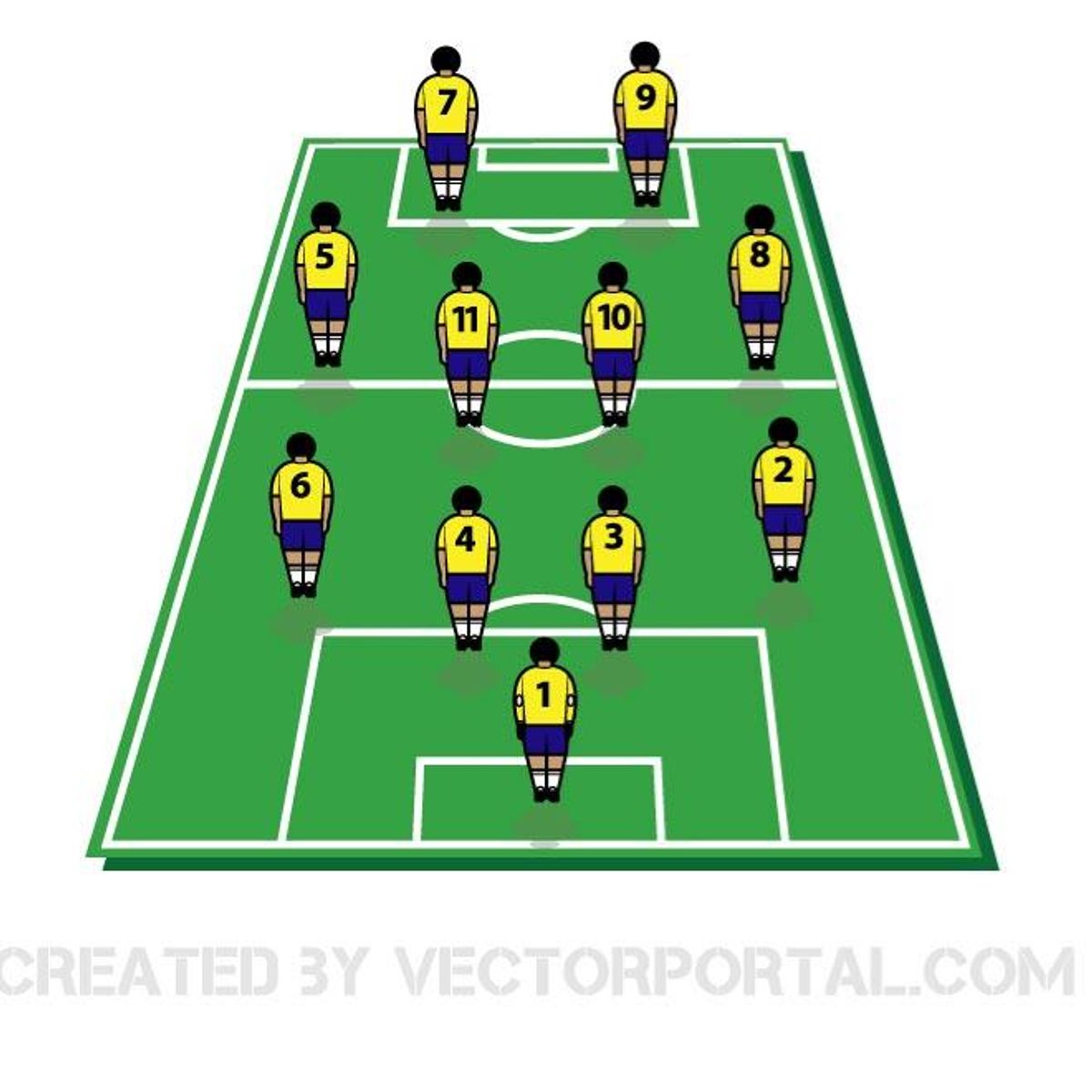
In the world of soccer, understanding formations is crucial for teams to adapt and overcome any opponent they face on the field. By analyzing opponent formations and implementing adaptive strategies, teams can gain a strategic advantage and enhance their tactical flexibility. This article delves into the importance of formations in soccer, how to analyze opponent formations, and the key strategies for implementing adaptive tactics.
Key Takeaways
- Understanding soccer formations provides a strategic advantage on the field.
- Analyzing opponent formations helps in identifying patterns and weaknesses to exploit.
- Implementing adaptive strategies like in-game adjustments and effective communication enhances team performance.
- Player roles in different formations play a significant role in the team’s success.
- Tactical flexibility allows teams to counteract opponent strengths effectively.
The Importance of Formations in Soccer
Strategic Advantage
In our quest to dominate the pitch, we recognize that the choice of formation is pivotal. A well-devised formation can be the cornerstone of our success, providing a framework that plays to our strengths and mitigates our weaknesses. For instance, the 4-3-2-1 formation, often referred to as the ‘Christmas Tree’, is lauded for its robust defense and dynamic attacking options.
By carefully selecting our formation, we set the stage for a harmonious and controlled approach to the game. This strategic decision influences not just the flow of the match, but also the morale of our team.
The formation we choose dictates the roles of each player, ensuring that everyone knows their responsibilities. Here’s a quick look at how the 4-3-2-1 formation aligns player roles:
- Defense: 4 defenders form a solid backline.
- Midfield: 3 midfielders provide a cohesive unit.
- Attack: 2 attacking midfielders support 1 striker.
This structure allows us to adapt to the ebb and flow of the match, making it easier to transition from defense to attack and vice versa. It’s about finding the right balance between discipline and creativity.
Player Roles
In soccer, the distribution of player roles is crucial to the functionality of the team as a whole. Each position on the field carries its own set of responsibilities and required skill sets. We must ensure that each player is well-suited to their role to maximize the team’s performance.
For instance, a goalkeeper must possess excellent reflexes and decision-making abilities, while a defender needs to be strong in tackles and aerial duels. Midfielders, the engine of the team, require stamina and vision to control the game’s tempo. Attackers, on the other hand, should have the agility and finishing skills to convert chances into goals.
It’s essential to recognize that the effectiveness of a player in their role is often dictated by the formation we choose. A formation can either highlight a player’s strengths or expose their weaknesses.
Here’s a simplified breakdown of the typical roles within a 4-3-3 formation:
- Goalkeeper (1): The last line of defense and key to starting attacks.
- Defenders (4): Comprising two center-backs and two full-backs, responsible for neutralizing opposition attacks.
- Midfielders (3): Including a defensive midfielder, a box-to-box midfielder, and an attacking midfielder, orchestrating both defense and attack.
- Forwards (3): Consisting of two wingers and a central striker, tasked with scoring and creating goal opportunities.
Tactical Flexibility
In our quest to master the game, we’ve learned that tactical flexibility is the cornerstone of outmaneuvering any opponent. By understanding the dynamics of different formations, we can adapt our strategy on the fly to exploit the ever-changing landscape of a match. For instance, consider the 3-5-2 formation, a tactical setup that provides a robust defense with three central defenders, while maintaining a flexible midfield quintet and two forwards to apply offensive pressure.
- The 3-5-2 allows for a strong central presence, both defensively and in midfield.
- Wing-backs in this formation can push forward to support attacks or drop back to defend, offering tactical versatility.
- The two forwards can work in tandem to disrupt the opponent’s defensive structure.
By shifting our formation in response to the game’s flow, we can maintain control and keep our opponents guessing. It’s about making the right moves at the right times to gain a strategic edge.
Our ability to switch formations not only confuses the opposition but also maximizes the potential of our players. Each position on the field can be a pivot point for change, and with the right adjustments, we can turn the tide of any game.
Analyzing Opponent Formations
Identifying Patterns
As we delve into our opponent’s gameplay, we begin to notice recurring strategies that form the backbone of their approach. Identifying these patterns is crucial; it allows us to predict their moves and plan our countermeasures effectively. For instance, we might observe a tendency for their full-backs to push high up the pitch, leaving space behind them vulnerable to a quick counter-attack.
Consistency in an opponent’s formation can be both a strength and a weakness. By mapping out their common plays, we can discern a pattern:
- Frequent use of wing play
- Reliance on a single playmaker
- High defensive line during possession
By understanding these tendencies, we can tailor our training sessions to simulate similar scenarios, ensuring our team is well-prepared for the upcoming match.
It’s not just about recognizing what they do well; it’s about anticipating their next move and being two steps ahead. This chess-like aspect of soccer is what makes the game as much a battle of wits as it is of physical prowess.
Exploiting Weaknesses
Once we’ve identified the patterns in our opponent’s play, our next step is to exploit any weaknesses we’ve discovered. For instance, if we’re facing a team that’s using the 4-2-3-1 Formation, we might consider altering our own formation to counteract theirs. A strong midfield presence can often disrupt the flow of a 4-2-3-1 setup.
By switching formations, we not only adapt to the opponent’s tactics but also create opportunities for our players to shine in areas where the opposition is vulnerable.
Here’s a simple approach we can take:
- Switch Formations: Alter the team’s formation to exploit weaknesses, favoring setups with a strong midfield presence.
- Use Target Man Against High Line: If the opponent plays a high defensive line, employing a target man to hold up the ball and bring others into play can be particularly effective.
Counteracting Strengths
After we’ve identified the patterns and weaknesses in our opponent’s formation, it’s crucial to focus on counteracting their strengths. For instance, when facing a team that excels with the 4-3-3 formation, we must be astute in our approach. This formation is known for its balance and width, offering both defensive solidity and attacking options.
By understanding its weaknesses and choosing the right formation, we can counter the 4-3-3 and gain the upper hand in a match.
To effectively neutralize the 4-3-3, we can employ a formation that overloads the midfield, such as a 4-5-1 or a 3-5-2. This allows us to disrupt their midfield dominance and cut off the supply to their forwards. Here’s a simple list of steps we might take:
- Analyze the opponent’s midfield trio.
- Deploy additional midfielders to create numerical superiority.
- Instruct our wingers to track back and support the defense.
- Use quick transitions to exploit the spaces left by their attacking fullbacks.
Implementing Adaptive Strategies
In-Game Adjustments
We understand that the dynamics of a soccer match are constantly changing, and being able to adapt in real-time is crucial. In-game adjustments are the subtle yet decisive moves that can tilt the balance in our favor. Whether it’s shifting from a defensive stance to a more attacking posture or vice versa, these changes must be executed seamlessly.
One key aspect of in-game adjustments is the fluidity of player positions and roles. For instance, when dominating the 4-4-2 formation, we might customize our approach by pushing our wingers further up the field to provide width and stretch the opponent’s defense. This can be particularly effective against teams that pack the midfield, as it forces them to contend with threats from the flanks.
It’s essential to communicate these changes clearly and quickly. Players need to be aware of their new responsibilities and how they fit into the adjusted strategy.
To ensure clarity, here’s a simple list of steps we follow when making in-game adjustments:
- Assess the current state of play and identify areas for improvement.
- Decide on the specific adjustments needed, such as formation changes or shifts in player roles.
- Communicate the changes to the team, ensuring everyone understands their new tasks.
- Monitor the impact of these adjustments and be ready to make further changes if necessary.
Substitution Tactics
We understand that the art of substitution goes beyond mere player replacement; it’s a strategic tool that can alter the course of a game. Substitutions can shift the momentum in our favor, allowing us to adapt to the unfolding dynamics on the pitch. For instance, introducing a fresh midfielder with a knack for distribution can help us regain control in the center of the park.
- Introduce a pacey winger to exploit tired defenders
- Bring on a defensive midfielder to protect a lead
- Swap a striker for a fresh pair of legs to press high
It’s crucial to have a bench that complements our starting eleven, ready to make an impact when called upon. This depth allows us to be unpredictable and responsive to the flow of the match.
By understanding the Soccer Substitution Rules, we can master the strategic art of changing the game. Whether it’s for tactical reasons, due to injury, or even a goalkeeper switch, each decision must be carefully considered to ensure it contributes to our overall game plan.
Communication on the Field
In the dynamic environment of a soccer match, effective communication is the cornerstone of our team’s success. It’s not just about shouting directions or encouragement; it’s about conveying clear, concise messages that can be understood and acted upon instantly. We emphasize the importance of non-verbal cues, such as hand signals or body language, which can often speak louder than words on a noisy pitch.
Communication on the field isn’t limited to the players. It extends to the coaching staff and even the supporters. A well-timed shout from the sidelines can provide the insight a player needs to make a game-changing decision. To illustrate the layers of communication within a team, consider the following:
- Verbal communication: Calls for the ball, warnings of approaching opponents, and quick tactical discussions.
- Non-verbal communication: Gestures for positioning, facial expressions of encouragement or caution, and the body language that signals readiness or fatigue.
- Bench communication: Instructions from the coaching staff, strategic changes, and motivational words during breaks in play.
Mastery of communication is not just about being heard; it’s about ensuring that the message is received and understood, leading to immediate and appropriate action on the field.
Conclusion
In conclusion, understanding soccer formations is crucial for adapting and overcoming any opponent on the field. By learning the strengths and weaknesses of different formations, teams can strategize effectively and outmaneuver their rivals. Soccer Rondo, a blog dedicated to educating users about the sport and the latest equipment, provides valuable insights and resources to help players and coaches enhance their understanding of formations. With the right knowledge and preparation, teams can confidently face any challenge and achieve success in the game of soccer.
Frequently Asked Questions
What is the role of formations in soccer?
Formations in soccer dictate the positioning and structure of players on the field, influencing team strategy and tactics.
How do formations provide a strategic advantage in soccer?
Formations allow teams to control the flow of the game, exploit opponent weaknesses, and optimize player roles for specific game scenarios.
What are the key player roles in different soccer formations?
Player roles vary based on the formation used, with positions like defenders, midfielders, and forwards each having specific responsibilities.
Why is tactical flexibility important in soccer formations?
Tactical flexibility enables teams to adapt to different opponents, game situations, and playing styles, enhancing their overall effectiveness on the field.
How can teams analyze and exploit opponent formations?
Teams can study opponent patterns, identify weaknesses in their formations, and develop strategies to capitalize on those vulnerabilities.
What are some effective in-game adjustment tactics in soccer?
In-game adjustments involve changing formations, player positions, and strategies during a match to respond to the evolving dynamics on the field.