
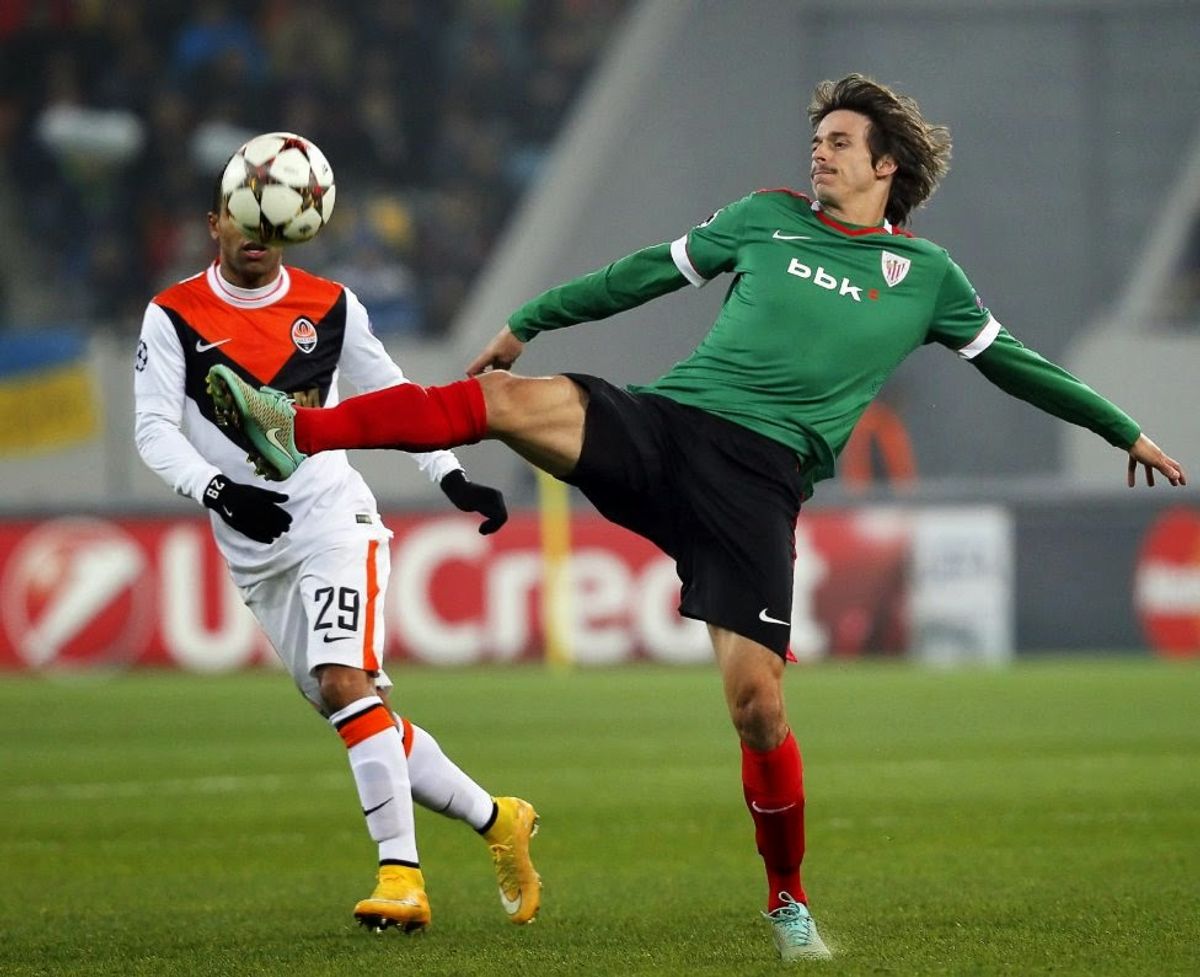
Welcome to Soccer Rondo’s guide on ‘Mastering the Art of Soccer: Tips and Tricks for Beginners.’ Whether you’re just starting out or looking to refine your skills, this article offers a comprehensive overview of essential soccer techniques. From the fundamentals of kicking to advanced strategies and mental preparation, we’ll provide you with the knowledge to enhance your game. Dive into our tips and drills, and start your journey to soccer excellence today.
Key Takeaways
- A strong foundation in kicking techniques, including stance, ball contact, and practice drills, is crucial for consistent performance.
- Dribbling skills, such as close ball control and evading defenders, are integral for advancing play and creating opportunities on the field.
- Understanding and mastering different types of kicks, like the power drive, chip shot, and curve, adds versatility to a player’s game.
- Advanced kicking techniques and situational awareness can significantly improve a player’s power, accuracy, and adaptability in matches.
- Mental preparation, including building mental toughness, strategic thinking, and goal-setting, is as important as physical skills for soccer success.
Fundamentals of Soccer Kicking
Stance and Posture: The Foundation of a Good Kick
We understand that the proper way to kick a soccer ball begins with the correct stance and approach. Positioning our bodies parallel to the ball, with our non-kicking foot placed beside the ball, pointing towards our target, is essential. This not only provides balance but also ensures accuracy in our kick. It’s important to maintain a relaxed yet focused posture, allowing for fluid motion during the kick.
Proper foot placement and follow-through are key to enhancing kicking precision and power. Here’s a quick checklist to ensure your foot placement is on point:
- Plant your non-kicking foot close to the ball.
- Align it with your target.
- Keep your foot steady and pointed toward your target.
- Trust your approach and follow through with confidence.
Consistent training and a well-structured practice regimen are essential for honing your ball-kicking skills. Regular target practice sharpens accuracy and builds the muscle memory needed for consistent performance.
By mastering the basics of ball kicking, we lay a solid foundation for advanced techniques. This section serves as a starting point for beginners and a refresher for seasoned players, unlocking the power of precision in our soccer kicks.
Ball Contact: Techniques for Precision and Power
We’ve all heard it before: contact is everything. When we strike the ball, we aim for consistency and power, which starts with the correct foot position. An open foot can lead to inconsistency, so we focus on a locked and flexed position, hitting the ball with the same spot on our foot each time. This precision is what translates into more accurate and powerful shots.
The area of the foot used for contact significantly affects the ball’s trajectory and speed. For a powerful strike, we use the top of our foot, ensuring our toes are pointed down. The follow-through is as crucial as the initial contact, as it determines the ball’s path and final velocity. We always remember to follow through with our kicking leg in the direction of the target to maintain power and direction.
Consistency isn’t just about power; it’s about precision. The way we contact the ball is just as crucial as where we place our feet. We keep our foot locked and ready to make that perfect connection.
Here’s a quick checklist to ensure our foot placement is on point:
- Ensure toes are pointed down
- Lock the ankle firmly
- Contact the ball with the same spot on the foot
- Follow through towards the target
To really get a grip on your follow-through, pay attention to the contact spot. We want our foot to hit that ball as if it’s the only thing that matters. Keep it disciplined, keep it consistent, and the difference in our game will be evident.
Practice Drills: From Basics to Consistency
We understand that mastering soccer skills is a journey of incremental progress. To foster this growth, we’ve designed a series of practice drills that evolve from simple exercises to more complex challenges. Start with the basics: passing and shooting against a wall. This not only hones your technique but also builds muscle memory. Here’s a simple progression to follow:
- Step 1: Practice passing against a wall, focusing on foot placement.
- Step 2: Progress to shooting, maintaining a consistent plant foot position.
- Step 3: Work on locking your foot in a flexed position for contact.
- Step 4: Gradually increase power and distance as your confidence grows.
Remember, this isn’t a quick fix. It’s a journey of small victories that lead to major improvements. Patience and persistence will be your best allies.
As you gain confidence, incorporate dynamic drills like ‘The Tunnel‘ to challenge your aiming and ball-handling skills. These activities are not just about repetition; they’re about developing a keen sense of control and precision under varying conditions. To ensure you’re progressing, increase the speed and complexity of the drills over time, always pushing your limits while maintaining control.
Developing Dribbling Skills
The Art of Close Ball Control
We understand that the essence of dribbling lies in the mastery of close ball control. Keeping the ball close to our feet is fundamental, ensuring it doesn’t stray and remains within our command at all times. This is the first step towards emulating the magic of soccer greats.
To enhance our close ball control, we must focus on the leading edge of our foot. It’s not just about the contact but how we carry out the dribble. Quick changes of direction and pace are crucial in tight spaces, allowing us to evade defenders with ease.
We must practice in confined areas, honing our ability to maneuver the ball with precision. This prepares us for the unpredictability of match situations, where space is a luxury and control is the currency.
Here are 6 steps to improve our ball control drills:
- Ensure that we gently make contact with the ball.
- Keep the ball close to our feet at all times.
- Use the leading edge of our foot for effective dribbling.
- Practice quick changes of direction.
- Incorporate sudden bursts of acceleration and deceleration.
- Shield the ball using our body positioning effectively.
Navigating Through Defenders
As we advance in our soccer journey, navigating through defenders becomes a pivotal skill. It’s not just about speed or strength; it’s about outsmarting the opposition. We’ve learned that dribbling the ball with each step is crucial. This technique brings the defender close, allowing us to swiftly move the ball to our advantage.
To effectively navigate through defenders, we must also master the art of deception. Tempting the defender into making a move gives us the opportunity to exploit their position. Remember, the best defenders use their minds as much as their athleticism.
Here are some key points to keep in mind:
- DO NOT take giant steps! Smaller, quicker steps help maintain balance and readiness.
- Use your body to shield the ball, making it harder for defenders to reach.
- Change pace and direction suddenly to throw off your opponents.
- Practice with a partner to simulate real-game scenarios and improve your reaction time.
Incorporating Dribbling into Game Play
As we transition from individual drills to actual game play, it’s crucial to weave dribbling seamlessly into our strategies. Dribbling isn’t just about ball control; it’s about creating opportunities. We encourage our players to maintain a balance between keeping their eyes on the ball and scanning the field for openings. This dual focus allows for better decision-making and more effective plays.
Peripheral vision plays a significant role in this aspect. While dribbling, players should use their peripheral vision to monitor the ball, while their direct vision should be on the lookout for teammates’ movements and potential passes. Here’s a simple drill to enhance this skill:
- Set up a series of cones in a circle with a 5-10m radius.
- Players dribble around the cones, aiming to keep their heads up and not focus solely on the ball.
- The drill is repeated at increasing speeds to simulate game conditions.
Remember, the goal is to keep the ball close, but your mind open. Dribbling effectively under pressure and in tight spaces can turn a defensive situation into an attacking opportunity.
Incorporating dribbling into game play also involves understanding when to pass. A successful dribble can draw defenders away, creating space for a pass that can lead to a scoring chance. It’s about knowing when to hold the ball and when to distribute it, always keeping the team’s advantage in mind.
Mastering Different Types of Kicks
The Power Drive: Maximizing Force and Distance
We’ve all marveled at the sheer power behind a professional player’s drive kick, wondering how they manage to generate such force. The secret lies in a combination of technique, strength, and momentum. By mastering body mechanics and utilizing the full range of motion, players can maximize the force of their kicks.
To kick with power, your entire body must work in unison. From the run-up to the follow-through, every element plays a part in driving the ball with maximum force. Here’s a quick checklist to ensure your technique is on point:
- Ensure your foot is flexed and ready for the post-drive step.
- Lockdown and drive through with purpose.
- Maintain a disciplined swing to avoid inefficiencies.
- Focus on the contact spot for a clean, powerful impact.
Consistency in your approach is vital. It’s not just about the power; precision is equally important. The way you contact the ball is just as crucial as where you place your feet.
Remember, after the drive step, your foot’s already in position, flexed, and ready to lock down and drive through. The key is to maintain that momentum, swinging forward consistently. It’s all about the discipline in your swing, avoiding inefficiencies that could send your ball veering off course.
The Chip Shot: Adding Finesse to Your Game
When we talk about the chip shot, we’re referring to a technique that lifts the ball over an advancing keeper. It’s a skill that requires finesse and a delicate touch. The trick to proper chipping lies in the way you come from under the ball. To execute a chip shot effectively, you need to scoop the ball by bringing your foot in under the ball, either from the side or dead-ahead.
Here’s a quick checklist to ensure your chip shot is on point:
- Approach the ball at a slight angle
- Position your supporting foot a comfortable distance from the ball
- Lean back slightly to get under the ball
- Strike the ball with the toe of your foot
- Follow through with your kicking leg to guide the ball upwards
Remember, it’s not just about the kick itself, but the approach, the angle, and the execution that lead to a successful strike.
And don’t forget, practice makes perfect. Incorporate drills like Soccer Tennis into your routine to enhance your skills. Keep a reasonable distance from the net, let the ball bounce, stay nimble, and give time to your teammates. With patience and practice, you’ll master the art of the chip shot.
The Curve: Bending the Ball with Precision
Mastering the curve in soccer is an essential skill for players who want to add a dynamic edge to their game. To execute a perfect curve, you need to understand the mechanics behind the spin. When we aim our kick to the bottom and outside of the ball, we apply the necessary spin to make the ball curve in the desired direction. For instance, to curve the ball to the left, we kick it on the right side to apply counter-clockwise spin.
Here’s a simple breakdown of the steps to achieve a curving ball:
- Position the ball with the valve facing you.
- Place your plant foot a few inches from the ball, pointing towards your target.
- Strike the ball with the inside of your foot, connecting with the lower half.
- Follow through with your kicking leg, wrapping it around the ball to enhance the spin.
It’s crucial to practice this technique regularly to gain precision and consistency. The angle of your approach and the follow-through are just as important as the kick itself.
Remember, the curve is not just a showy move; it’s a strategic tool that can bend the ball around obstacles or into the corner of the net, making it a valuable asset in your soccer arsenal.
Advanced Kicking Techniques
Enhancing Power and Accuracy
We’ve all seen the impact of a well-placed kick that combines both power and accuracy. To achieve this, we focus on the technique—ensuring proper foot placement and follow-through. Regular target practice is key to sharpening our accuracy.
To enhance our precision, we engage in drills that emphasize eye contact with the ball, technical execution, and positioning. We set up cones or makeshift goals to create specific zones to aim for, making our practice sessions as close to real game scenarios as possible.
Here’s a simple drill to start with:
- Place cones in each corner of the goal.
- Practice shooting at each cone from various distances.
- Gradually increase the difficulty by adding a goalkeeper or defensive pressure.
Incorporating small-sided games into our training regimen not only enhances our accuracy under pressure but also improves our quick passing and intelligent positioning—skills that are essential for hitting that sweet spot on the goal.
Situational Kicking: Adapting to Match Conditions
We understand that every match presents unique challenges, and adapting our kicking strategy is crucial. In the heat of the game, it’s vital to stay calm and focus on reading the game. Anticipating the opponent’s setup, whether they opt for a high pressure line or a more conservative approach, can significantly influence our choice of kick.
When we’re faced with a free kick, we rely on our ability to predict the ball’s direction based on our kicking technique. This skill is honed through consistent practice and an understanding of the game’s dynamics.
Here’s a quick checklist for situational kicking:
- Assess the defensive wall and goalkeeper’s position
- Choose the appropriate kick type: power drive, curve, or chip shot
- Consider the wind direction and pitch conditions
- Communicate with teammates for strategic positioning
Consistent training and a well-structured practice regimen are essential for honing these skills. Incorporating small-sided games into our training enhances our accuracy under pressure, simulating match conditions that require quick passing and intelligent positioning.
Innovative Drills for Advanced Players
We’ve developed a series of innovative drills tailored for advanced players, focusing on enhancing their agility, speed, and ball control under pressure. One such drill is the 11-16 Player Soccer Drill, which is perfect for larger groups and emphasizes teamwork alongside individual skill development.
- The drill begins with each player dribbling at full speed while maintaining short touches on the ball.
- Upon reaching a designated cone, players must execute a swift turn and head back to the starting point.
- The next player starts immediately after the previous one completes the circuit.
Consistency and increasing speed are key to mastering this drill. We encourage players to push their limits and strive for continuous improvement.
Remember, the goal is not just to go through the motions but to refine your technique and build endurance. This drill is designed to simulate match conditions, where quick thinking and rapid changes in direction are crucial.
As you incorporate these drills into your practice sessions, focus on the quality of execution. It’s not just about doing the drills; it’s about doing them right and with purpose.
Mental Preparation and Strategy
Building Mental Toughness for Competitive Play
We understand that the path to soccer excellence isn’t just paved with physical training; it’s also about cultivating a strong mental game. Mental toughness is the backbone that supports our skills under the intense pressure of competitive play. It’s about maintaining composure when the stakes are high and the crowd is roaring.
- Visualization: We picture success, such as the ball hitting the back of the net, to build confidence and focus.
- Resilience: We learn to quickly recover from setbacks, keeping our heads in the game.
- Adaptability: We train our minds to be agile, ready to adjust to the ever-changing dynamics of the match.
By integrating mental preparation into our routine, we not only enhance our performance but also solidify our love for the game.
Regular feedback and analysis play a crucial role in our mental conditioning. We seek insights from coaches and utilize video analysis to pinpoint areas for improvement, ensuring that our mental strategies are as sharp as our physical ones.
Strategic Thinking: Making Smart Decisions on the Field
We understand that the heart of soccer lies in the ability to make quick, smart decisions under pressure. The more you believe in yourself, the stronger your decisions will be. It’s not just about physical prowess; it’s about mental agility and the capacity to read the game, anticipating the opponent’s next move.
In the heat of the game, it’s crucial to stay calm and focused. Your ability to read the game and anticipate the opponent’s setup is key.
Here’s a quick checklist to keep in mind for free kicks:
- Visualize the trajectory of the ball.
- Assess the opponent’s defensive setup.
- Decide on the kick’s power and curve based on the wall’s position.
- Execute with confidence and precision.
Remember, strategizing for free kicks and high-pressure moments can make the difference between glory and disappointment. Use visualization techniques to prepare your mind for success. Imagine the ball sailing through the air and into the net, and let this mental rehearsal prime your brain for the real deal.
Visualization and Goal-Setting for Soccer Success
We understand that visualization is an important tool that allows us to mentally create game circumstances and the results we want to induce in reality. By picturing the ball hitting the net, we enhance our confidence and performance under pressure. Mental toughness is the final piece of the puzzle in mastering soccer skills. It’s what separates the good players from the great ones.
Success in soccer is as much about mental preparation as physical prowess.
When strategizing for free kicks and high-pressure moments, taking a moment to imagine ourselves successfully executing a kick primes our brain for the real deal. We must also set clear, achievable goals to track our progress and maintain motivation. Here’s a simple framework for goal-setting:
- Define specific objectives for each training session.
- Set performance goals, such as improving passing accuracy.
- Establish outcome goals, like winning a certain number of matches.
Remember, soccer is a game of moments. Being mentally prepared means we’re ready to seize every opportunity. Work on your mental agility to adapt quickly to changing situations on the field.
Conclusion
As we wrap up this guide on mastering the art of soccer for beginners, remember that the journey to excellence is a continuous one. From understanding the basics of ball kicking to mastering advanced techniques and mental preparation, each step is crucial in developing your skills. Practice consistently, stay patient, and be willing to adapt and learn new strategies. Whether it’s perfecting your dribbling, diversifying your kicks, or enhancing your offensive play, every effort counts towards becoming a more proficient and versatile player. Keep challenging yourself, and don’t hesitate to revisit Soccer Rondo for more tips, drills, and insights to aid in your soccer journey.
Frequently Asked Questions
What is the best stance for kicking a soccer ball?
A proper stance for kicking a soccer ball involves planting your non-kicking foot alongside the ball, pointing towards your target, with your knees slightly bent for balance and power.
How do I improve my ball contact for more powerful kicks?
Focus on striking the ball with the correct part of your foot, usually the laces for power kicks or the inside for precision, and follow through towards your target to maximize power.
What are some effective dribbling drills for beginners?
Beginners can practice dribbling by setting up cones to weave through, maintaining close control, and gradually increasing speed as their skills improve.
How can I learn to curve the ball when kicking?
To curve the ball, strike it off-center with the inside or outside of your foot, applying a sweeping motion to create spin, which causes the ball to bend in flight.
What mental strategies can help improve my soccer game?
Building mental toughness through visualization, setting achievable goals, and developing strategic thinking can significantly improve your performance on the field.
How can I adapt my kicking technique to different match conditions?
Adapting your kicking technique involves understanding the playing surface, weather conditions, and game context, and choosing the appropriate type of kick for the situation.